


Police are preparing for mass unrest as rival protests and football crowds collide in London
British police are preparing for one of the biggest security operations seen in recent years as fears grow over potential disorder in central London this weekend.
More than 100,000 protesters are expected to flood the capital on the same day as the FA Cup final at Wembley Stadium, creating what authorities fear could become an explosive situation.
The Metropolitan Police are deploying around 4,000 officers across London as far-right supporters linked to the Unite the Kingdom (UTK) march, organised by Tommy Robinson, prepare to march through Westminster. Robinson, whose real name is Stephen Yaxley-Lennon, remains one of Britain’s most divisive political figures.
Police are also dealing with a separate pro-Palestine demonstration expected to attract between 15,000 and 40,000 people, including anti-racism counter-protesters opposing Robinson’s event. Officers are expected to keep the rival groups apart throughout the day.
The scale of the operation has forced authorities to introduce extraordinary policing powers across large parts of central London. Officers will be authorised to carry out stop-and-search checks without requiring reasonable suspicion of an offence.
Armoured Sandcat vehicles and drones will also be used as police brace for possible violence and disorder.
The tension surrounding the demonstrations has intensified following recent political shifts across Britain. Prime Minister Keir Starmer recently described the rise of the far right as “a fight for the soul of this country” after Reform UK made major gains in local elections.
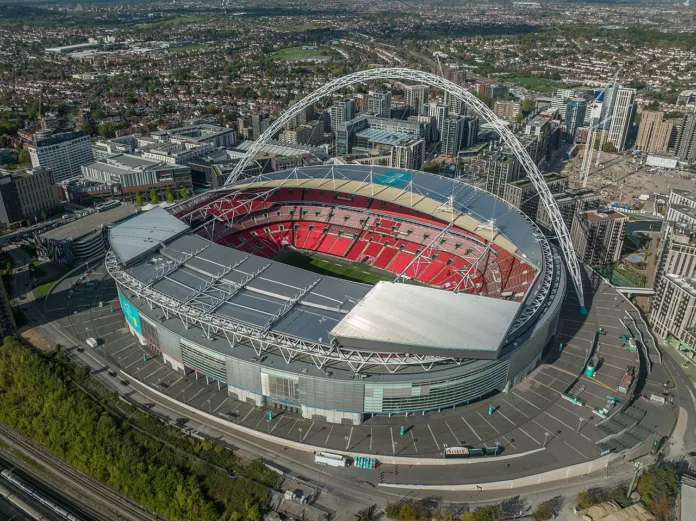
Authorities are particularly concerned because the protests coincide with the FA Cup final between Manchester City and Chelsea at Wembley. The match kicks off at 3pm, meaning tens of thousands of football supporters will also be travelling across London at the same time.
Police believe some football hooligans have historically supported Robinson’s demonstrations. Social media videos circulating ahead of the march reportedly encourage fans to attend the rally after the match.
The last UTK protest in September shocked even organisers and police due to its size, with more than 150,000 people gathering in Parliament Square. The event drew widespread criticism after extremist speakers allegedly promoted anti-Muslim rhetoric and Christian nationalism from public stages.
This time, police are reportedly preparing not only to pursue charges against individuals accused of hate speech, but also against organisers if authorities believe speeches amount to incitement or conspiracy offences.
Embed from Getty Images
The Muslim Council of Britain has now warned Muslims to avoid central London entirely during the demonstrations, citing fears of rising hostility and violence.
Dr Wajid Akhter, the organisation’s secretary general, warned that the atmosphere surrounding the march risked worsening racial tensions across the country.
“Nobody should be forced to walk Britain’s streets in fear of their safety,” he said.
The protest’s promotional campaign has also attracted controversy after organisers circulated an AI-generated video portraying Robinson standing before enormous cheering crowds while denouncing Muslims. The video ends with the phrase: “Tommy Robinson’s vision, this is our destiny.”
Despite the inflammatory imagery, Robinson released videos urging supporters to remain calm and avoid confrontation with police or counter-protesters.
“We’re not coming for a big battle,” he said in one video message directed at officers policing the march.
In another clip, Robinson told followers to “win by smiling at them” and insisted the event was “not an event to bring your anger.”
Even so, campaigners monitoring extremism warn Robinson’s influence remains significant. Nick Lowles, from anti-racism organisation Hope Not Hate, said the far-right figure can still mobilise enormous crowds despite widespread opposition.
“Lennon can put more people on the streets than any other person,” Lowles said. “He is a phenomenon.”
As London braces for the demonstrations, fears are growing that a volatile mix of politics, football crowds and rival protests could push tensions dangerously close to breaking point.