
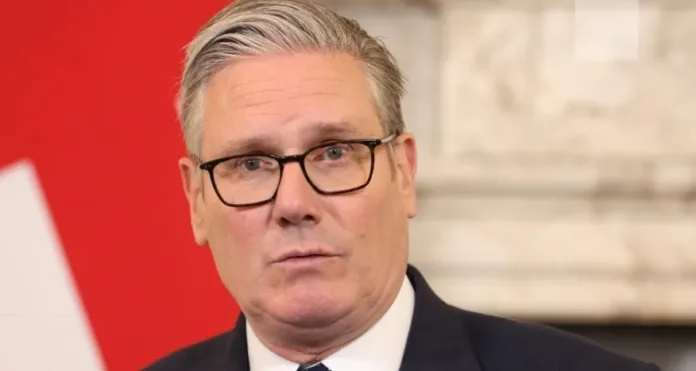

PM faces fierce backlash after signalling tougher action on Palestine protests
Prime Minister Keir Starmer has triggered fierce political backlash after signalling that some pro-Palestine protests in the UK could face tougher restrictions, including possible bans.
The remarks have pushed an already volatile debate into even more dangerous territory, placing Starmer at the centre of a growing national row over protest, public safety and the limits of political expression.
Speaking as pressure mounted over public order and extremist rhetoric, Starmer said certain demonstrations may have crossed a line. His comments focused on protest language that he suggested should no longer be treated as legitimate political expression, including chants such as “globalise the Intifada”.
That phrase has now become the flashpoint.
Starmer’s intervention followed the recent terror attack in Golders Green, a development that has sharply intensified scrutiny around protest policing and public safety. In that context, his comments have landed with immediate force, raising the prospect of tougher state action against demonstrations linked to pro-Palestine activism.
The Prime Minister’s position has already sparked a fierce reaction.
Supporters of tighter restrictions argue the government has a duty to intervene when protest language is seen as inflammatory or when demonstrations raise serious concerns around public order. For them, Starmer’s remarks reflect a harder line on rhetoric they believe has gone unchecked for too long.
Critics see something far more dangerous unfolding.
Civil liberties groups and political opponents have warned that any move to restrict or ban protests based on political messaging risks dragging Britain into a far more serious confrontation over free speech and the right to protest. For them, Starmer’s comments signal a deeply controversial shift, one that could place the government on a collision course with long-standing democratic protections.
That is where the political danger now lies.
What began as a debate over protest slogans has rapidly escalated into a wider argument about state power and political dissent. Starmer has not announced a blanket ban, but his willingness to suggest that some marches could be prohibited has transformed the issue into a major political flashpoint.
That distinction matters, but only to a point.
Even without a formal policy, the signal from Downing Street is already clear enough to provoke alarm. By raising the possibility of bans, Starmer has moved the conversation beyond condemnation and into the territory of state enforcement.
That shift has sharpened the stakes dramatically.
For many in Westminster, the issue is no longer simply about protest management. It has become a test of how far the government is prepared to go in policing politically charged public expression during a period of heightened national tension.
That question now hangs over Starmer.
He is trying to project control in an atmosphere shaped by fear, anger and mounting pressure over security. But in doing so, he risks opening another front, one that pits public order against civil liberty in a way that rarely ends cleanly.
The backlash is unlikely to fade quickly.
The political sensitivity surrounding pro-Palestine protests was already intense. Starmer’s comments have now driven it into a far more combustible phase, where every statement carries legal, political and moral consequences.
For now, no formal ban has been announced. But the warning alone has been enough to ignite a fierce national argument, one that is no longer just about protest slogans in the street.
It is now about who decides what crosses the line, and what happens when the government decides it has the power to stop it.