
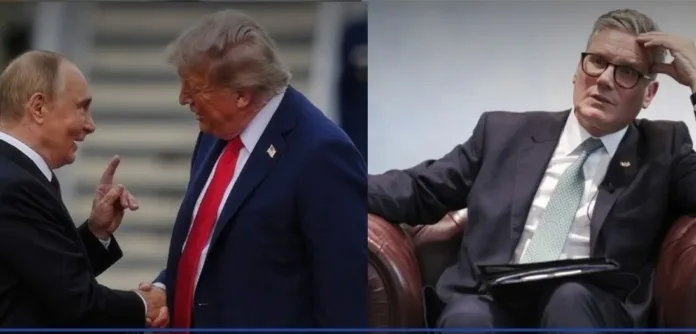

PM faces backlash after linking global tensions to rising UK energy costs
Pressure is mounting on Keir Starmer as questions swirl around his recent comments linking global tensions to the UK’s worsening energy crisis. What began as a routine exchange on international affairs has quickly spiralled into a politically charged moment, exposing the fragile intersection between foreign policy and domestic cost-of-living concerns.
At the centre of the controversy lies a reported conversation involving Donald Trump and the broader geopolitical instability tied to Vladimir Putin. Starmer suggested that actions connected to these figures have played a role in driving up energy prices, a claim that has triggered sharp scrutiny both inside Westminster and beyond.
When pressed on whether he directly confronted Trump about the issue, Starmer stopped short of confirming. That hesitation has only intensified speculation. Critics argue that if such a conversation did take place, it signals a bold, potentially risky diplomatic stance. Others believe the ambiguity reflects a government navigating delicate international relationships while trying to maintain control at home.
Energy prices have already become a defining issue for households across the UK. Bills remain stubbornly high, and public frustration continues to simmer. Against that backdrop, any suggestion that global political figures are directly influencing domestic hardship carries weight. It is not just a policy matter anymore; it is personal for millions.
The timing could not be more sensitive. Ongoing tensions in key global regions, including disputes affecting critical oil routes, have heightened concerns about supply stability. The UK, like many nations, finds itself exposed to these pressures. Starmer’s remarks appear to acknowledge that reality, but they also risk placing him at the centre of a narrative that feels increasingly out of control.
Opposition voices have seized on the moment. Some accuse the Prime Minister of deflecting responsibility by pointing outward, while others question the clarity of his message. Was he issuing a warning, or attempting to shift the blame? The lack of a definitive answer has left room for interpretation, and in politics, that space rarely stays empty for long.
Supporters, however, argue that Starmer is simply stating an uncomfortable truth. Global politics and energy markets are deeply intertwined, and ignoring that link would be misleading. From this perspective, his comments reflect a leader willing to confront the complexities of the current crisis rather than offering simplistic reassurances.
Still, the optics remain challenging. Linking domestic hardship to figures as polarising as Trump and Putin introduces a volatile element into an already tense situation. It invites headlines, fuels debate, and keeps the story alive far beyond its initial spark.
Inside government circles, there is a growing awareness that messaging will be critical in the days ahead. The public is not just looking for explanations; it is looking for solutions. And while global factors may shape the landscape, voters ultimately judge leaders on what they do within their own borders.
For now, Starmer finds himself walking a narrow path. Acknowledge the global forces at play, and risk appearing powerless. Focus solely on domestic action, and risk oversimplifying a complex crisis. It is a balancing act with little margin for error.
As the story continues to unfold, one thing is clear: the energy crisis is no longer just an economic issue. It has become a political flashpoint, one where every word carries consequences, and every hesitation invites scrutiny.