
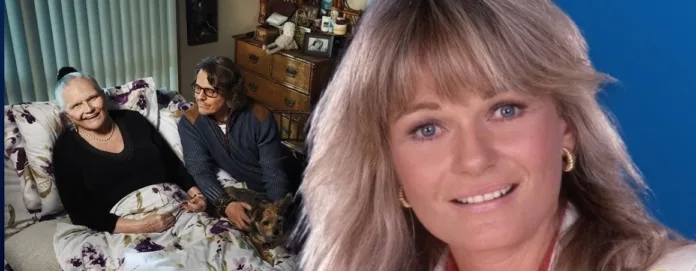

Oscar-nominated actor Valerie Perrine dies aged 82 after long battle with Parkinson’s
Valerie Perrine, the Oscar-nominated actor celebrated for her performance in Lenny and her role in the *Superman* films, has died at the age of 82 following a prolonged struggle with Parkinson’s disease.
Filmmaker Stacey Souther confirmed her death in a message shared on Facebook, expressing deep sorrow at the loss. He described Perrine as a figure of remarkable resilience, noting that she faced years of illness with “incredible courage and compassion” and never complained, even as her condition progressed.
Souther also revealed that Perrine’s final wish was to be laid to rest at Forest Lawn Cemetery. However, after more than 15 years of battling Parkinson’s, her finances had been exhausted. He urged supporters to contribute to a fundraiser established to help cover funeral expenses, calling on admirers to honour her legacy.
Perrine received her Parkinson’s diagnosis in 2015. Her experience living with the condition later became the focus of a 45-minute documentary directed by Souther, which premiered in 2019. The film offered an intimate look at her daily life and the challenges she endured, while also capturing her enduring spirit.
In recent years, her circumstances had drawn renewed attention. A 2023 profile detailed how Souther had taken on a caregiving role not only for Perrine but also for her brother Ken, who also suffered from Parkinson’s disease.
Born into a life that would eventually intersect with Hollywood’s brightest lights, Perrine began her career far from the film industry, working as a showgirl in Las Vegas. Her early life was marked by tragedy when her fiancé, a gun importer, accidentally shot himself in the heart. She later moved to Los Angeles, where her personal life again collided with tragedy through her relationship with celebrity hairdresser Jay Sebring, who was later murdered by members of the Manson Family.
Her entry into acting came after a chance encounter with a talent agent at a dinner party. She soon secured roles that would introduce her to audiences, including appearances in Slaughterhouse-Five (1972) and The Last American Hero (1973). That same year, she made television history by becoming the first female actor to appear intentionally nude on US television in the PBS play *Steambath*.
However, it was her role as Honey Bruce in Bob Fosse’s 1974 biographical drama *Lenny* that established her as a serious actor. Starring opposite Dustin Hoffman, Perrine delivered a performance that earned her the Best Actress award at the Cannes Film Festival, along with nominations for both an Academy Award and a Golden Globe.
Her success continued with a string of notable roles throughout the late 1970s. She became widely recognised for portraying Miss Teschmacher, the girlfriend of Gene Hackman’s Lex Luthor, in *Superman* (1978) and its 1980 sequel. She also appeared in *The Electric Horseman* (1979), playing the ex-wife of Robert Redford’s character.
In subsequent years, Perrine took on varied roles, including performances in *The Border* (1982) alongside Jack Nicholson and *Can’t Stop the Music* (1980), a film that later gained cult status despite receiving a negative reception at the time. Perrine herself later expressed regret over participating in the project, stating that it damaged her career and prompted her move to Europe.
Although her on-screen appearances became less frequent in later decades, she continued to work intermittently, including a role in *What Women Want* (2000). Reflecting on her career, Perrine once described co-star Michael Caine as “the nicest human being” she had worked with.
Despite the hardships she faced both personally and professionally, Perrine remained a figure admired for her determination and grace. Her death marks the end of a life that spanned moments of acclaim, controversy and quiet endurance, leaving behind a legacy that continues to resonate within the film industry.