
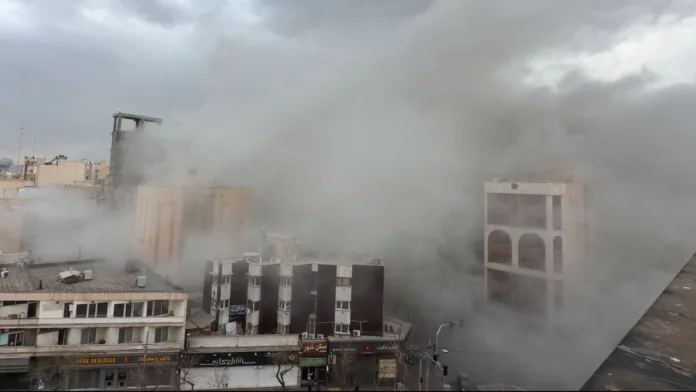

Saudi officials confirm two drones struck the US embassy, sparking a fire
A fire broke out at the United States embassy in Riyadh after two drones struck the compound, Saudi authorities confirmed, marking a dramatic escalation in the widening US-Israel war on Iran.
The incident unfolded amid a surge of military action across the Middle East. Saudi officials said two drones hit the embassy in the Saudi capital, igniting a blaze inside the diplomatic site. Images circulating online showed smoke rising from the area, though officials have yet to release further details about casualties or the extent of structural damage.
The strike came as the region reels from days of intensifying conflict between the United States, Israel and Iran. The confrontation deepened after Washington and Tel Aviv launched coordinated strikes against Iranian targets on 28 February. Iranian authorities retaliated with missile and drone attacks across Israel and the Gulf states.
In Washington, US secretary of state Marco Rubio defended the American military action, stating that the United States attacked Iran “pre-emptively” after learning Israel intended to launch strikes. Speaking to reporters, Rubio insisted there had been an imminent threat to US forces.
“There absolutely was an imminent threat,” Rubio said. “We knew that if Iran was attacked … that they would immediately come after us. And we were not going to sit there and absorb a blow before we responded.”
He added that failing to act first would have resulted in higher casualties.
The conflict has already taken a deadly toll. US Central Command confirmed that six US service members have been killed since Saturday. In a statement posted online, Centcom said it had recovered the remains of two previously unaccounted-for personnel from a facility struck during Iran’s initial wave of attacks. The identities of the fallen are being withheld pending notification of their families.
Meanwhile, oil markets have reacted sharply. Prices have continued to climb amid fears of supply disruption, particularly as confusion surrounds the status of the Strait of Hormuz, a critical global shipping route. Iran’s Revolutionary Guards previously claimed the strait was closed, while other reports have questioned that assertion.
Elsewhere in the region, tensions continue to flare. Israeli officials confirmed new waves of strikes on Tehran, while Lebanon has ordered fresh evacuations. The Israeli prime minister, Benjamin Netanyahu, stated that the operation would not become an “endless war” but argued that Iran’s nuclear programme made immediate action necessary.
The White House claimed that 49 senior Iranian leaders were killed in the strikes, describing the operation as a decisive blow. However, the scale and long-term consequences of the campaign remain unclear.
The drone strike on the US embassy in Riyadh underscores the regional spillover from the conflict. Diplomatic missions traditionally enjoy protected status under international law, making the attack especially alarming for global observers. Saudi Arabia has not publicly attributed responsibility for the drones.
In response to the deteriorating security situation, the United States has urged its citizens to depart more than a dozen Middle Eastern countries immediately. Several Gulf states have also heightened alert levels around critical infrastructure, including oil refineries and military installations.
As night fell over Riyadh, emergency crews worked to contain the embassy fire. The blaze, sparked by the drone impacts, symbolised how swiftly the confrontation has spread beyond direct military targets.
With major combat operations continuing and diplomatic tensions rising, the strike on the US embassy marks another volatile chapter in a conflict that shows no sign of stabilising.