
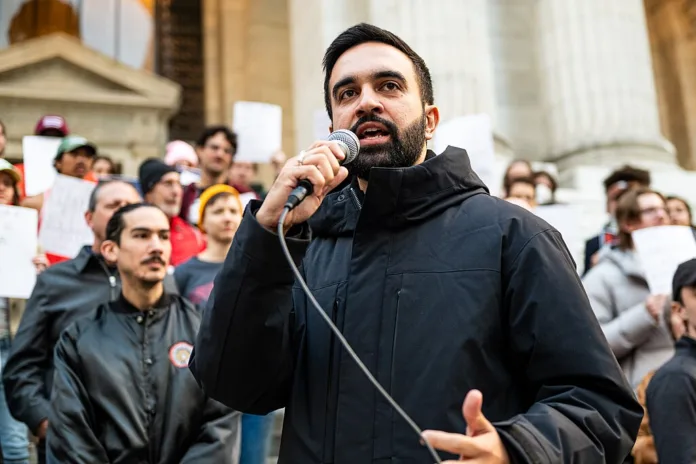


Zohran Mamdani, a self-described democratic socialist, claims victory in New York’s mayoral race, facing challenges from Trump and moderates
Zohran Mamdani, a 34-year-old democratic socialist, has secured a stunning victory in the New York City mayoral race, becoming the first Muslim mayor in the history of the nation’s largest city. Once a relatively unknown figure, Mamdani’s campaign surged with his promises to tax the wealthiest New Yorkers and corporations to fund a sweeping expansion of social programs aimed at improving living conditions for working-class residents.
In his victory speech, Mamdani declared, “In this moment of political darkness, New York will be the light.” His victory represents a major political shift in the city, where he defeated independent candidate Andrew Cuomo and Republican Curtis Sliwa, both of whom were vocal in their opposition to his progressive agenda.
Mamdani’s platform, which includes proposals for universal childcare, freezing rents in subsidised housing, and offering free public buses and city-run grocery stores, is ambitious. He aims to fund these initiatives with new taxes that would raise an estimated $9 billion from the wealthiest individuals and corporations. While his supporters are enthusiastic, questions remain about whether these plans can be delivered amid opposition from New York state politicians and financial experts who are skeptical about the feasibility of his funding model.
The win also comes at a time of heightened political tension, with Donald Trump, though not on the ballot, casting a long shadow over the race. Trump has already threatened to cut federal funding to New York City if Mamdani were to win, and he has continued to ramp up his attacks on the new mayor-elect. In his speech, Mamdani directly challenged Trump, saying, “Turn up the volume, we have a response.”
However, Mamdani’s victory also raises questions about how he will navigate the incoming political fire from the Republican party and the broader challenges of dealing with a polarized political environment. Trump’s threats to withhold federal funds from New York, combined with sharp attacks from other Republicans, could set the stage for a contentious relationship between Mamdani’s administration and the national government.
Mamdani’s victory also places him in a delicate position within his own party. Although the left-wing of the Democratic Party is celebrating his triumph, he has faced resistance from more moderate members of the party who were initially slow to back his candidacy. While his progressive ideals and ability to connect with voters who previously leaned toward Trump were crucial to his success, Mamdani may struggle to gain the full support of Democratic leaders, who could question his ability to navigate the complexities of executive governance.
In addition to his ambitious agenda, Mamdani will need to find a way to work effectively with the Democratic leadership in New York, which has at times been reluctant to support his outsider candidacy. With multiple challenges ahead, including fierce opposition from Republicans and the need for cooperation within his own party, Mamdani’s tenure as mayor could face significant obstacles as he strives to implement his vision for a more equitable and progressive New York City.