
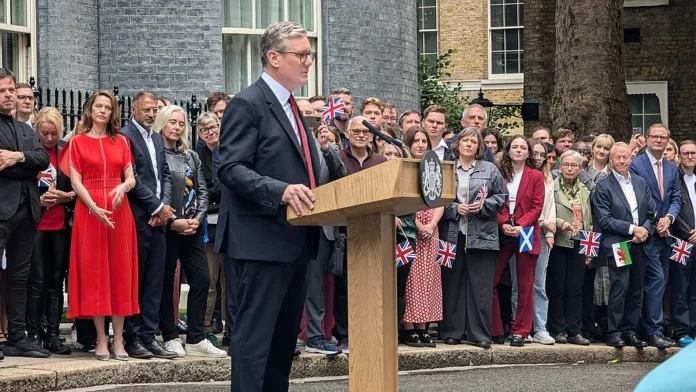


The UK has recorded the lowest investment level in the G7, raising fresh doubts over growth
The UK has recorded the lowest level of investment among the G7 economies, delivering a damaging signal for growth and placing renewed pressure on Prime Minister Keir Starmer and his economic leadership.
The figures show Britain trailing its major global peers on investment, a key driver of long-term productivity, wage growth and economic resilience. Economists have long warned that weak investment leaves the country vulnerable to slower growth, poorer infrastructure and reduced competitiveness. This latest data reinforces those concerns and intensifies scrutiny of the government’s approach.
Investment levels are widely regarded as a measure of confidence in an economy’s future. When businesses and the state invest less, it often reflects uncertainty, high costs or lack of clarity around policy direction. Falling behind every other G7 nation underlines the scale of the challenge now facing the UK.
The results have sparked warnings that economic growth risks being choked before it can properly recover. Analysts argue that without a sustained increase in both public and private investment, Britain will struggle to modernise its industries, upgrade transport and energy systems, or boost productivity across regions.
For Sir Keir Starmer, the figures arrive at a sensitive moment. Having placed economic stability and growth at the centre of his leadership pitch, the investment ranking raises questions about whether those ambitions are translating into measurable outcomes. Critics say the numbers expose structural weaknesses that remain unresolved.
Embed from Getty ImagesSupporters of the government caution that investment trends are shaped by long-term factors and global conditions, not just short-term political leadership. They argue that rebuilding confidence takes time, particularly after years of economic disruption and uncertainty. Even so, the comparison with other G7 nations has sharpened the political impact of the data.
The investment shortfall also carries implications beyond headline growth figures. Lower investment can slow job creation, hold back innovation and deepen regional inequalities. Areas already struggling to attract capital may find it even harder to catch up, widening economic divides.
Business groups have repeatedly called for clearer signals on infrastructure, skills and industrial strategy, arguing that certainty is essential for unlocking private investment. The latest figures suggest those concerns remain unresolved, with Britain failing to keep pace with competitors.
Opposition voices have seized on the data as evidence that the UK economy is losing ground internationally. They warn that continued underinvestment risks locking the country into a cycle of weak growth and limited opportunity, making it harder to raise living standards.
Within government circles, the challenge now is how to respond. Boosting investment typically requires a mix of policy stability, targeted public spending and incentives for private capital. Delivering that balance while managing fiscal constraints remains one of the most difficult tasks facing any administration.
The G7 comparison is particularly stark because it places the UK alongside its closest economic peers. Falling to the bottom of that group sends an uncomfortable message to international investors and trading partners about Britain’s economic trajectory.
As debates over growth, productivity and competitiveness intensify, the investment figures are likely to feature prominently. For now, they stand as a warning sign, highlighting the gap between economic ambition and performance.
Whether the government can reverse the trend and restore confidence will shape the UK’s economic outlook in the years ahead. What is clear is that remaining at the bottom of the G7 on investment is not a position Britain can afford to accept.