
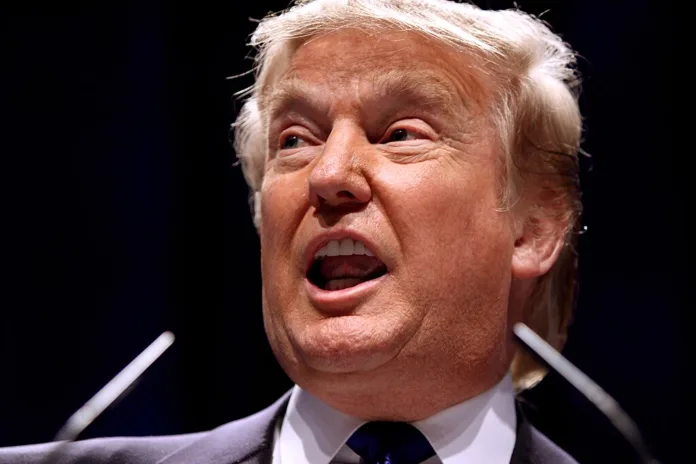


The US president says Washington is weighing military action amid growing unrest in Iran
Donald Trump has said the United States is considering “very strong options” in response to widespread protests in Iran, including the possibility of military intervention.
Speaking to reporters aboard Air Force One late on Sunday, the US president said the situation was under close review by both civilian and military leadership. He confirmed that the US armed forces were actively examining potential responses as unrest continues to spread across Iran.
“We’re looking at it very seriously,” Trump said. “The military is looking at it, and we’re looking at some very strong options. We’ll make a determination.”
Trump added that Iran’s leadership had reached out to Washington to seek negotiations following his public threats of military action. According to the president, discussions were underway to arrange a meeting, though he cautioned that diplomatic talks might not prevent immediate action.
“We may have to act before a meeting,” he said.
There was no immediate response from Iranian officials to Trump’s comments.
Earlier on Sunday, senior figures in Iran issued a warning against any foreign military intervention. Iran’s parliament speaker said that if the country were attacked, retaliation would extend beyond Iran’s borders.
He warned that Israel, as well as US military bases and naval vessels in the region, would be considered legitimate targets in the event of an assault on Iranian territory.
The protests in Iran began on December 28, triggered by the rapid collapse of the Iranian rial. Merchants at Tehran’s Grand Bazaar closed their shops in protest, signalling growing anger over economic conditions. What began as a reaction to financial instability quickly developed into nationwide demonstrations.
As protests spread to cities across the country, grievances broadened beyond inflation and rising living costs. Demonstrators increasingly voiced opposition to Iran’s clerical leadership, which has governed since the Islamic Revolution in 1979.
Iranian state media reported that at least 109 members of the security forces have been killed during the unrest. However, opposition groups based outside the country claim the death toll is significantly higher and includes hundreds of protesters.
The true scale of casualties remains unclear due to severe restrictions on information. Monitoring organisations say Iran has imposed a nationwide internet blackout that has now lasted more than 72 hours, limiting communication and the flow of independent reporting.
The blackout has further fuelled international concern about the situation inside the country, as governments and rights groups struggle to assess the full impact of the protests and the response by Iranian authorities.
Trump’s comments mark a sharp escalation in US rhetoric at a time of heightened global tensions, following recent American actions in Venezuela and renewed confrontations with several geopolitical rivals. His suggestion that military action could precede diplomacy underscores the uncertainty surrounding Washington’s next move.
While the president indicated that talks with Iran may still take place, his remarks made clear that the option of force remains firmly on the table as the crisis continues to unfold.