
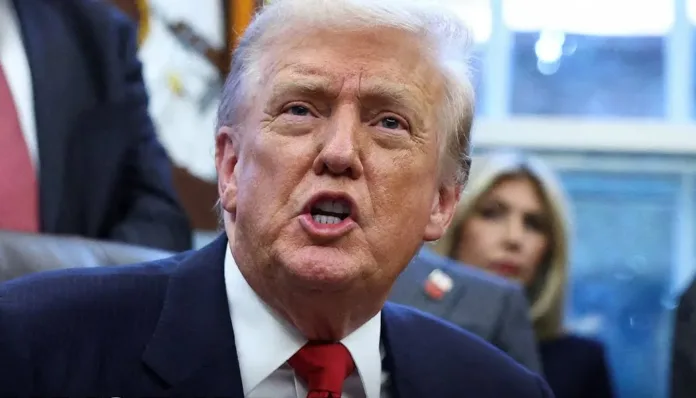

Trump gives BBC a Friday deadline to retract ‘false’ edits or face a $1bn legal battle
US President Donald Trump has demanded that the BBC apologise and pay $1 billion (£760 million) in damages after accusing the broadcaster of a “reckless disregard for the truth.” His legal team has warned that failure to comply by Friday will result in a lawsuit filed in Florida courts.
The threat came as the BBC faced turmoil following the resignations of its director-general Tim Davie and head of news Deborah Turness. Both executives stepped down amid the fallout from the editing of Trump’s speech delivered on the day of the Capitol Hill riot. The controversy, first revealed in a leaked internal memo, has thrown the corporation into crisis.
According to that memo, Panorama, the BBC’s flagship investigative programme, combined two separate parts of Trump’s address in a way that appeared to show him urging his supporters to act violently. The disclosure prompted an internal investigation and intense scrutiny over editorial standards at the broadcaster.
The revelation was first reported on 3 November, when The Telegraph disclosed details of the memo, which also alleged anti-Israel and pro-trans bias within the organisation. As the BBC attempted to contain the growing scandal, Trump seized upon the findings to accuse the corporation of deliberate distortion.
Lawyers acting for the US president sent a formal legal letter to the BBC on Sunday demanding compensation, a retraction and a public apology. The letter described the edited material as “false” and “inflammatory”, asserting that it caused the president “overwhelming financial and reputational harm.”
“The BBC must retract its defamatory claims and issue a full apology,” the letter stated. “Failure to comply will leave President Trump with no choice but to pursue the broadcaster for damages.”
A senior official within the Trump administration added that the White House “may consider” withdrawing the BBC’s press credentials in response to the dispute. Such a move would significantly restrict the network’s access to official briefings and further strain relations between the United States and Britain’s public service broadcaster.
The ultimatum arrived on the same evening that Davie and Turness confirmed their resignations. The departures, described by insiders as a heavy blow to morale, left the BBC’s leadership in flux at a time of acute public criticism.
In a letter to the Culture, Media and Sport Committee of MPs, BBC chairman Samir Shah admitted an “error of judgment” had been made in the handling of Trump’s speech. He wrote that the corporation accepted responsibility for the misjudgement but denied that systemic bias existed. Shah insisted that there were no attempts to “bury” the issue and stated he was considering issuing a personal apology to Trump.
Speaking later, Shah maintained that while the editing mistake was regrettable, it did not reflect a pattern of institutional prejudice. “The BBC remains committed to editorial integrity,” he said, defending the corporation’s standards of impartiality.
Meanwhile, tensions continued to rise within the BBC. The Today programme presenter Nick Robinson reported that several journalists had suggested the controversy could be linked to a politically motivated power struggle inside the organisation. According to sources quoted by Robinson, there were claims of “alleged political interference” and suggestions of a “hostile takeover of parts of the BBC.”
Despite the upheaval, Jonathan Munro, the global director of BBC News, remained in post. Munro had previously described the editing of Trump’s remarks as “normal practice” but was now facing fresh scrutiny. In a message to staff on Monday, he urged colleagues to stay focused, acknowledging that “the coming days and weeks will be hard” but emphasising that “our work continues as normal.”
As the BBC braces for possible litigation and mounting political pressure, the world’s oldest national broadcaster finds itself at the centre of an unprecedented confrontation with the president of the United States. The next move now lies with the corporation’s leadership — and the Friday deadline looms.