
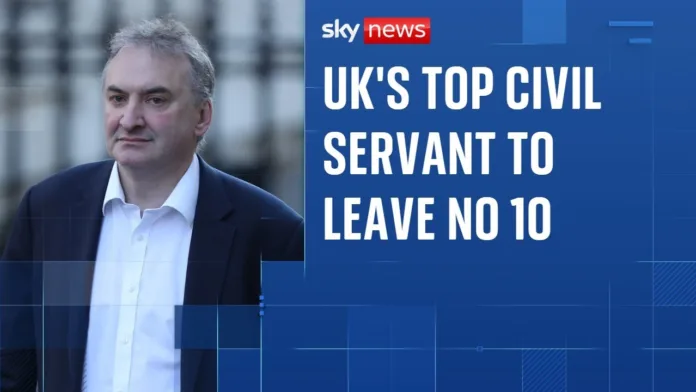

Sir Chris Wormald steps down after mounting pressure and media backlash
Sir Chris Wormald has been forced out as head of the Civil Service and cabinet secretary, bringing his short tenure to an abrupt end.
Prime Minister Sir Keir Starmer, who appointed Sir Chris in December 2024, confirmed that he had agreed to the departure. In a statement, Sir Keir said he was grateful “for the support he has given me over the past year” and thanked him for his long career in public service.
The Cabinet Office described the move as being “by mutual agreement”. However, the decision follows months of negative media reports suggesting that Downing Street had grown increasingly unhappy with Sir Chris’s performance.
His exit makes him the shortest-serving cabinet secretary in the history of the role.
At the time of his appointment, Sir Keir had tasked Sir Chris with overseeing “the complete re-wiring of the British state to deliver bold and ambitious long-term reform”. Yet questions persisted about whether a career civil servant was the right figure to lead sweeping reform of the Civil Service.
Sir Chris also held ultimate responsibility for the due diligence checks conducted ahead of Lord Mandelson’s appointment as US ambassador. Although he assumed the cabinet secretary role only days before that appointment was formally announced, the controversy surrounding the Mandelson scandal placed additional scrutiny on his position.
His departure comes amid wider upheaval within the government’s senior ranks. In recent days, Sir Keir’s chief of staff, Morgan McSweeney, and director of communications, Tim Allan, have also left their posts as the prime minister seeks to reset his team following the Mandelson row.
Until a permanent successor is appointed “shortly”, Sir Chris’s responsibilities will be divided between Catherine Little, permanent secretary at the Cabinet Office; Dame Antonia Romeo, permanent secretary at the Home Office; and James Bowler, permanent secretary at the Treasury.
The government is understood to favour Dame Antonia Romeo as his successor. If appointed, she would become the first female head of the Civil Service. She had previously been on the four-person shortlist when Sir Chris was chosen for the role.
However, Lord McDonald, former head of the Foreign Office, told Channel 4 News that any appointment process should “start from scratch” and called for a “full process”. His remarks have been interpreted as referencing an earlier investigation into Dame Antonia over spending allegations dating back to 2017 when she served as consul-general in New York. A Cabinet Office spokesperson rejected the criticism, stating that all allegations had been dismissed and that there was “no case to answer”.
Opposition figures reacted sharply to Sir Chris’s departure. Conservative leader Kemi Badenoch accused the prime minister of making him “the latest person Keir Starmer has thrown under the bus to save his own skin”. She had earlier urged that Sir Chris remain in post until the release of parliamentary documents relating to Lord Mandelson’s appointment.
Dave Penman, head of the FDA Union representing senior civil servants, described the treatment of Sir Chris as “a new low for this government and its relationship with the Civil Service”. He criticised days of “open speculation” and anonymous briefings which he said had undermined Sir Chris’s authority.
Liberal Democrat leader Sir Ed Davey also expressed concern, posting that he was “very worried about who Keir Starmer will blame when there is literally no one else left in Number 10.”
In his own statement, Sir Chris described it as “an honour and a privilege” to have served as a civil servant for more than 35 years and said it had been “a particular distinction” to lead the service as cabinet secretary.
As the government moves swiftly to appoint a replacement, the sudden exit underscores mounting pressure within Downing Street and raises fresh questions about leadership stability at the heart of the British state.