
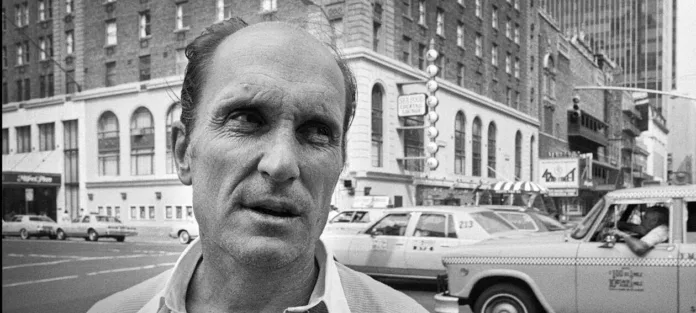

Seven-time Oscar nominee and Godfather star dies aged 95, wife confirms
Robert Duvall, the Oscar-winning actor whose commanding presence defined some of cinema’s most enduring roles, has died aged 95.
His wife, Luciana Duvall, confirmed his death in a statement shared on Facebook on Monday. “For each of his many roles, Bob gave everything to his characters and to the truth of the human spirit they represented,” she wrote.
Duvall built a career on intensity. Audiences remember him as Tom Hagen, the cool-headed consigliere to the Corleone family in The Godfather, and as the unforgettable Lieutenant Colonel Bill Kilgore in Apocalypse Now. In that 1979 Vietnam epic directed by Francis Ford Coppola, he delivered the now-legendary line: “I love the smell of napalm in the morning.”
Across nearly 100 films, Duvall carved out a reputation as one of Hollywood’s most formidable talents. He earned seven Academy Award nominations and won Best Actor in 1983 for Tender Mercies, portraying a washed-up country singer struggling with redemption. The performance was understated yet powerful, a hallmark of his craft.
He also drew acclaim for roles in The Great Santini, where he played the strict and domineering Lieutenant Colonel Bull Meechum, and in The Apostle, which he wrote, directed and starred in. The latter earned him another Oscar nomination and showcased his willingness to take creative risks outside the studio system.
Tributes have poured in from across the film industry. Actor Adam Sandler described Duvall as “one of the greatest actors we have ever had,” while The Sopranos star Michael Imperioli called him “one of the best ever” and “an actor’s actor.”
Born in 1931 in Annapolis, Maryland, Duvall was the son of a US Navy admiral and an amateur actress. After graduating from Principia College in Illinois and serving in the US Army, he moved to New York City to pursue acting. There, he shared a flat with Dustin Hoffman and befriended Gene Hackman as all three worked to establish themselves in the fiercely competitive world of theatre and film.
His early film breakthrough came in To Kill a Mockingbird, where he played the reclusive Boo Radley. Though the role required few words, Duvall’s quiet presence left a lasting impression. Screenwriter Horton Foote, who recommended him for the part, later wrote Tender Mercies with Duvall in mind.
Duvall’s career spanned genres and decades. He moved seamlessly between war epics, crime dramas, political biopics and character-driven stories. In Stalin, he portrayed the Soviet leader, while in Frances Ford Coppola’s Apocalypse Now he embodied a surreal, almost mythic military figure. His performances balanced force with vulnerability, often revealing fractured men beneath hardened exteriors.
When Hollywood fatigue set in, Duvall took control of his own projects. With The Apostle, he explored faith and moral conflict through the story of a troubled preacher. Later, Assassination Tango allowed him to indulge his passion for Argentina and the tango, a dance he loved deeply.
In his later years, Duvall divided his time between Los Angeles, Argentina and a farm in Virginia. There, he converted a barn into a tango dance hall, blending art with everyday life.
Robert Duvall’s death marks the end of a towering chapter in American cinema. His performances remain etched into film history, defined by authenticity, restraint and a fierce commitment to the craft.