
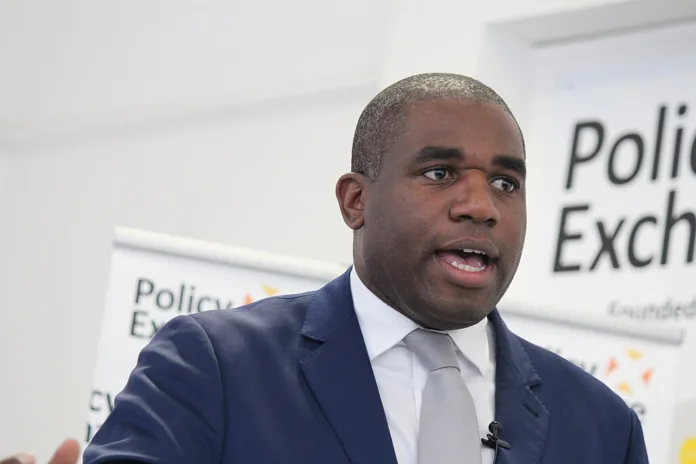


Reform UK mayoral candidate apologises after telling David Lammy to “go home” online
A Reform UK mayoral candidate has issued a public apology after provoking outrage with a social media post that told the foreign secretary, David Lammy, to “go home”.
Chris Parry, who is standing as Reform UK’s candidate for the Hampshire and Solent mayoralty, said his remark was “clumsily worded” and claimed it had been intended ironically. The apology followed widespread condemnation of the post, which many critics described as racist and offensive.
The comment emerged amid an already volatile political atmosphere, with tensions heightened by disputes over online safety, government regulation of artificial intelligence, and wider concerns about extremist rhetoric entering mainstream politics.
Parry acknowledged that the wording of his post was inappropriate and said he regretted the offence it caused. However, his explanation failed to quiet criticism from across the political spectrum, with opponents arguing that phrases such as “go home” carry a long history of racial hostility regardless of intent.
The controversy placed Reform UK under renewed scrutiny, particularly as the party attempts to expand its local and regional influence ahead of upcoming elections. Critics accused the party of failing to properly vet candidates and tolerating inflammatory language that undermines social cohesion.
The apology came as senior political figures were already dealing with fallout from a separate but related controversy involving sexualised deepfake images generated by artificial intelligence. The government has criticised the limited response of a major social media platform after its AI tool was used to create explicit imagery, describing the move as insulting to victims of misogyny.
Embed from Getty Images
Downing Street said restricting access to the AI image generator did not go far enough and warned that all regulatory options remain on the table. Ministers stressed that swift action is required to prevent the creation and spread of unlawful images, particularly those targeting women and public figures.
Within this charged environment, Parry’s remarks added fuel to an already intense debate over responsibility, accountability and standards in public life. Political observers noted that controversies involving online conduct now carry immediate and serious consequences, especially for candidates seeking public office.
Reform UK has faced further criticism in recent days over accusations that councils it controls are preparing to raise council tax despite previous promises to cut it. Opponents claim these developments expose a gap between the party’s rhetoric and its actions once in power.
Parry’s apology was one of several attempts by Reform figures to contain political damage as the party faces mounting pressure to demonstrate discipline and credibility. While he insisted that his values do not align with racism or intolerance, campaigners and community groups have argued that such language cannot be dismissed as irony.
The incident has reignited wider discussions about how political speech is policed, both formally through regulation and informally through public reaction. For many critics, the episode underscores concerns that provocative messaging is increasingly used to attract attention, even at the cost of social harm.
As the mayoral campaign continues, Parry’s comments are likely to remain a focal point, raising questions about judgment, accountability and the standards voters should expect from those seeking to represent them.