
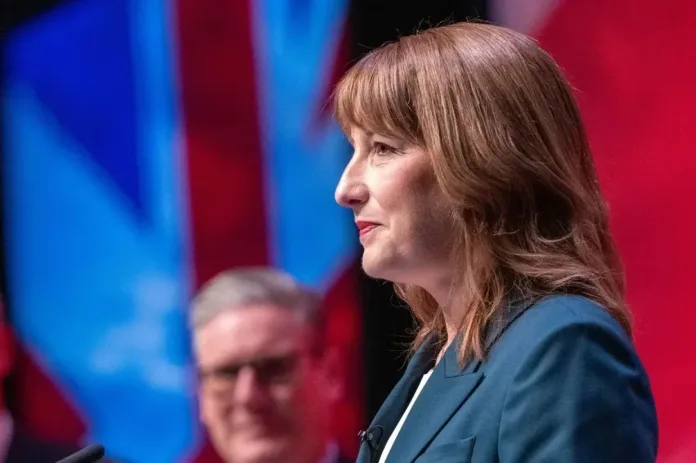

Reeves drops income tax rise after new forecasts shrink financial gap, but turmoil lingers.
Rachel Reeves has abandoned plans to raise income tax rates in the Budget after receiving unexpectedly improved economic forecasts that softened the financial outlook. Government sources confirmed the reversal after weeks of strong hints that the chancellor would break Labour’s election promise to leave the basic, higher and additional income tax rates untouched. The shift comes after new assessments from the Office for Budget Responsibility suggested that the gap in the public finances is around ten billion pounds smaller than earlier estimates.
The decision marks a dramatic retreat from proposals that had dominated Westminster debates and agitated Labour MPs. A rise in income tax rates had been one of the options sent to the budget watchdog as Reeves explored ways to fill what had been described as a thirty billion pound shortfall. The hole was largely driven by a downgrade in productivity that weighed heavily on future receipts. New figures have since projected stronger wage growth and healthier tax revenues, reducing the scale of the challenge. Even so, the remaining gap of roughly twenty billion pounds still forces Reeves to consider difficult measures.
Rather than change the tax rates themselves, the chancellor may now freeze or lower the thresholds at which workers begin paying each rate. This move would increase the number of people drawn into tax bands as wages rise, allowing the Treasury to raise billions without formally breaking its manifesto promise. Government sources insist that such steps would still be tough choices and maintain that the decision was not driven by political turbulence surrounding the prime minister’s future.
In recent months, ministers had appeared to prepare voters for a tax rise. Reeves warned in a pre budget speech that the government faced necessary choices and said every part of society would have to contribute. Labour MPs were told that avoiding income tax rises would require deep cuts in capital spending. The prime minister himself declined to repeat his earlier pledge on income tax when challenged in Parliament. Yet the prospect of tearing up a central promise alarmed many Labour backbenchers who feared the political consequences ahead of upcoming elections.
Government borrowing costs briefly rose when the possible rate increase became public but eased again when reports emerged that the financial gap was smaller than expected. The chancellor has set herself strict rules on borrowing and debt, seeking to create a stronger buffer in case of economic shocks. That buffer currently stands at ten billion pounds and Reeves aims to increase it. Her team has explored a range of revenue raising options that include a possible tax on electric vehicles and higher charges for gambling companies.
Extending the freeze on income tax and National Insurance thresholds is viewed as one of the simplest measures. The policy was introduced in 2023 and is scheduled to end in 2028. The Institute for Fiscal Studies estimates that extending the freeze for two more years could raise more than eight billion pounds annually. It would also pull more low paid workers into the tax system and push many into higher bands as wages grow. Reeves would face questions about why she criticised the freeze last year when she argued it would hurt working people by taking more money from their payslips.
The political response to the retreat has been fierce. Conservative leader Kemi Badenoch accused the government of chaos and irresponsibility. She demanded guarantees that no taxes on work, business, homes or pensions would rise. The Liberal Democrats called on the chancellor to explain her intentions and accused her of misleading the public. The SNP described the government as being in complete disarray.
Downing Street refused to confirm whether any income tax changes remain under consideration. A spokesperson repeated that the chancellor intends to build resilient public finances and provide stability for businesses as she finalises the Budget.