
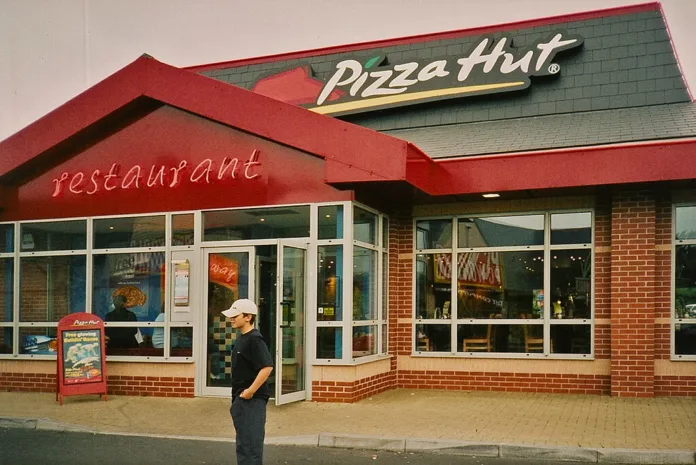


Pizza Hut’s UK operator collapses, forcing the closure of 68 restaurants and mass redundancies
Pizza Hut has confirmed it will close 68 of its UK restaurants after the company behind its dine-in venues collapsed into administration, leaving more than 1,200 jobs hanging in the balance.
The operator, DC London Pie, which ran the chain’s sit-down restaurants across the country, appointed administrators from corporate finance firm FTI Consulting on Monday. The collapse marks yet another blow for the casual dining sector, which continues to struggle with rising costs, weak consumer spending, and an industry still reeling from the pandemic.
The closures will affect dozens of towns and cities, including Dudley, Kidderminster, Solihull, Shrewsbury, Rugby, Coventry, Hereford, and Stratford-upon-Avon. Sites in the East Midlands such as Kettering and Wellingborough are also among those due to shut.
Across the rest of the UK, branches in London, Leeds, Cardiff, Edinburgh, Bournemouth, Portsmouth, and Truro are all on the list of closures. In total, 68 restaurants and 11 delivery-only sites will close their doors for good.
The move puts around 1,210 staff members at risk of redundancy, with administrators now beginning the consultation process. Employees have been told they will be kept informed as the restructuring continues.
American hospitality group Yum! Brands, which owns Pizza Hut globally, has stepped in to rescue part of the operation. In a pre-pack administration deal, Yum! acquired 64 dine-in sites, allowing them to keep trading while the rest of the network is wound down.
Embed from Getty Images
The company said the rescue deal would preserve hundreds of jobs and protect the future of the brand’s presence on the UK high street. It added that Pizza Hut UK will continue to operate through a mix of company-owned and franchise branches, including 351 delivery Huts across the UK, Northern Ireland, and Ireland.
A spokesperson for Yum! Brands said the decision had been made to safeguard the business’s long-term sustainability amid a challenging economic climate. “While these closures are regrettable, this acquisition allows us to protect the strength of the brand and ensure Pizza Hut remains a fixture across the UK,” they said.
For those set to close, the impact will be felt deeply. Many of the affected sites are long-standing restaurants that have served communities for decades, from high-street family favourites to shopping-centre staples.
The full list of shuttered branches includes well-known locations such as Beckton, Finchley Lido, Greenwich, Enfield, Feltham, and Russell Square in London, as well as Manchester Fort, Wigan, Leeds White Rose, Norwich, Dundee, and Yeovil. Delivery hubs in towns including Aylesbury, Luton, and Milton Keynes will also close.
The company has blamed surging energy bills, rent hikes, and food inflation for making the dine-in model unsustainable. Like many chains, Pizza Hut has been battling to adapt to changing customer habits, as more people opt for takeaways and delivery services rather than dining out.
Industry analysts say the closures highlight the financial strain still facing the hospitality sector despite inflation showing signs of easing. “Casual dining has been squeezed from both sides — higher operating costs and customers cutting back,” one retail consultant said. “Even big names like Pizza Hut are not immune.”
Staff and customers have reacted with sadness, many sharing memories online of birthdays and family meals at the chain’s famous all-you-can-eat salad bar. One employee posted on social media: “It’s heartbreaking. We’ve been part of this community for years. None of us saw this coming.”
Pizza Hut has operated in the UK since 1973, becoming a fixture of British dining culture with its deep-pan pizzas, dessert buffets, and red-roofed restaurants. At its peak, it had more than 700 outlets across the country.
While the brand’s delivery arm continues to perform strongly, the closures mark one of the largest contractions in its UK history — a sign of how rising costs and shifting consumer behaviour are reshaping the nation’s high streets.
For many, the end of so many local Pizza Huts feels like the loss of a piece of nostalgia. As one customer wrote: “It’s more than pizza — it’s childhood memories disappearing one store at a time.”