
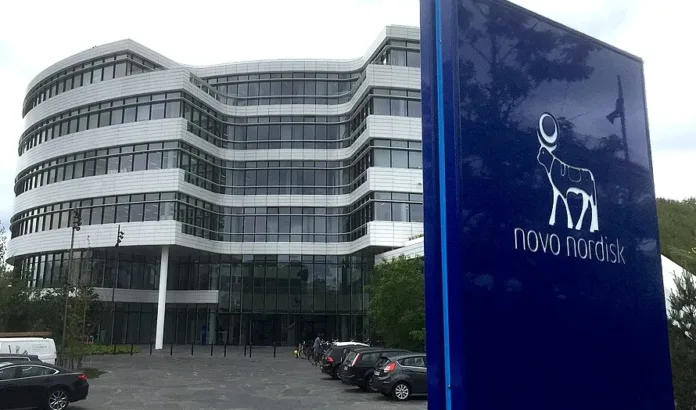


Novo Nordisk warns of falling sales and profits in 2026 as shares plunge and leaders leave
Investor confidence in Novo Nordisk took a brutal hit this week after the Danish drugmaker warned that both sales and profits are set to fall in 2026, triggering a sharp sell-off and compounding the shock with the departure of two senior executives.
The warning came just months into the tenure of chief executive Maziar Mike Doustdar, whose early leadership had been marked by optimism. Novo had enjoyed a buoyant period following the launch of its Wegovy pill and a strong run in its share price. That momentum came to an abrupt halt on Tuesday.
Novo told markets it now expects sales and earnings to decline by between 5% and 13% in 2026. The outlook stands in stark contrast to last year’s performance, when the company delivered sales growth of 10% and operating profit growth of 6% at constant exchange rates.
Several pressures are converging on the business. In the United States, Novo is bracing for lower sales as competition intensifies and prices soften across parts of its portfolio. The company also flagged an additional blow from the “Most Favoured Nation” pricing deal it recently agreed with the Trump administration, which is expected to weigh on revenues.
Speaking to journalists on Wednesday, Doustdar described the outlook as the product of “a year of unprecedented pricing pressure”. He said the company was not underestimating the scale of the challenge and stressed that Novo would pursue volume growth in obesity and diabetes to soften the impact.
Currency movements are adding to the strain. Novo warned that the weakening of the US dollar against the Danish krone is likely to dent results in 2026, creating an additional headwind for earnings.
International markets offer a more mixed picture. Novo expects global sales to continue growing as the GLP-1 market expands worldwide. However, the company cautioned that some overseas markets will be affected by patent expirations tied to its key semaglutide molecule, threatening longer-term revenue streams.
In raw numbers, Novo’s scale remains formidable. Total sales last year reached around 309bn Danish kroner, close to $50bn, representing a 6% increase in local currency terms. Its blockbuster diabetes drug Ozempic generated roughly 127bn kroner, while obesity treatment Wegovy delivered 79.1bn kroner.
Despite the gloomy guidance, there was one bright spot. The early rollout of the Wegovy pill has exceeded expectations. According to Doustdar, more than 170,000 patients have started using the pill within just four weeks of launch. That uptake is more than double what was seen with previous branded anti-obesity drugs in the US. Crucially, most prescriptions appear to be for patients new to such treatments, suggesting the overall market is expanding rather than merely shifting users.
The financial warning was swiftly followed by a leadership shake-up. Dave Moore, executive vice president of US operations, is leaving the company for personal reasons. Novo credited him with building its global business development function and playing a central role in the launch of Ozempic. He will be replaced by Jamey Millar, who joins from UnitedHealth Group’s Optum Speciality Holdings.
A second senior departure was also confirmed. Ludovic Helfgott, executive vice president of product and portfolio strategy, is stepping down to pursue new opportunities. His role will be taken over by Hong Chow, formerly an executive vice president at Merck KGaA with responsibility for China and international markets.
The market reaction was swift and unforgiving. Novo’s share price plunged by more than 15%, forcing a temporary trading halt due to extreme volatility. The sell-off wiped out the company’s gains for the year, pushing its stock into negative territory.
Analysts warned that while Novo slightly beat sales expectations in the fourth quarter, those results are likely to be overshadowed as investors reassess forecasts in light of the bleak 2026 outlook. For a company long viewed as one of Europe’s most reliable growth stories, the warning marks a jarring reversal and a test of confidence that may take time to repair.