
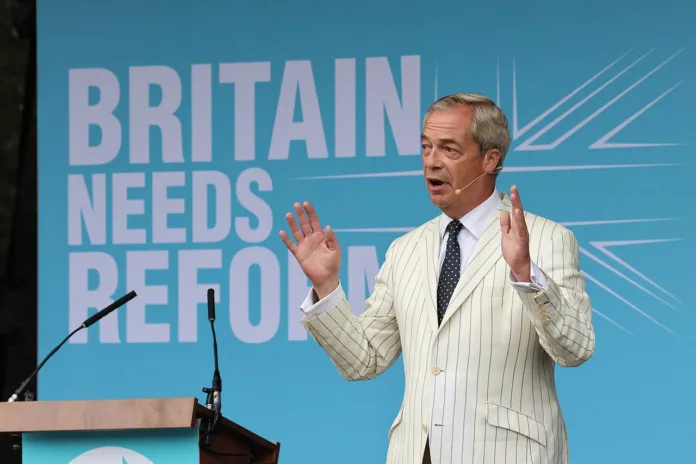


Farage presents sweeping proposals aimed at reshaping Britain’s political direction
Nigel Farage has unveiled a sweeping political blueprint that he says could dramatically reshape Britain’s future, presenting a vision designed to challenge what he calls the country’s entrenched political establishment. The Reform UK leader revealed the proposals as part of a broader effort to position his party as a disruptive force within the current political landscape.
Farage framed the plan as a direct challenge to the existing order of British politics. He argued that traditional parties have become disconnected from voters and suggested that a radical shift in direction is required if the country is to regain economic momentum and political confidence.
The proposals outlined in the blueprint include significant policy changes that touch multiple areas of government. Farage has spoken about reducing the scale of foreign aid spending, expanding domestic fossil fuel production and shrinking the size of the civil service. He has also suggested turning Britain into a global hub for cryptocurrency innovation, an idea he believes could position the country at the forefront of a rapidly evolving financial sector.
According to Farage, these proposals are intended to break what he describes as a cycle of cautious policymaking that has defined British politics in recent years. His argument centres on the belief that bold decisions, rather than incremental adjustments, are necessary to transform the country’s economic trajectory.
The announcement arrives during a period of heightened political competition. Reform UK has been attempting to expand its presence by presenting itself as an alternative to both major parties. Farage’s blueprint forms part of that strategy, offering voters a detailed outline of how his party would approach governance if it gained greater influence.
Supporters of the plan argue that the proposals reflect a willingness to confront long-standing policy debates that other parties have avoided. They believe the emphasis on energy production, regulatory reduction and financial innovation signals a break from conventional thinking.
Embed from Getty Images
Critics, however, have questioned whether the proposals could realistically be implemented. Some political analysts have argued that turning Britain into a major cryptocurrency hub would require significant regulatory changes and careful oversight. Others have raised concerns about the practical implications of reducing government structures or reshaping energy policy.
Despite the scepticism, the blueprint has already succeeded in capturing attention across Westminster and beyond. Political observers say the proposals highlight Farage’s continued ability to generate debate about Britain’s direction, even when his party operates outside the main structures of government.
Farage himself has described the initiative as a call for national renewal. He has repeatedly emphasised the need for Britain to adopt a more confident economic strategy, suggesting that hesitation and bureaucratic complexity have slowed progress in key sectors.
The unveiling of the plan also signals an attempt to broaden Reform UK’s policy identity. While the party has often focused on issues such as national sovereignty and immigration, the new blueprint presents a wider economic and administrative vision designed to appeal to voters seeking structural change.
Whether the proposals gain significant political traction remains uncertain. Much will depend on how voters respond to the idea of sweeping reform in areas that traditionally evolve more gradually. Political rivals are likely to scrutinise the details closely, challenging both the feasibility and the consequences of the suggested policies.
For now, Farage’s announcement ensures that his party remains firmly within the national conversation about Britain’s future. By presenting a radical plan to reshape the country’s political and economic structures, he has again placed himself at the centre of debate about how Britain should navigate the years ahead.