
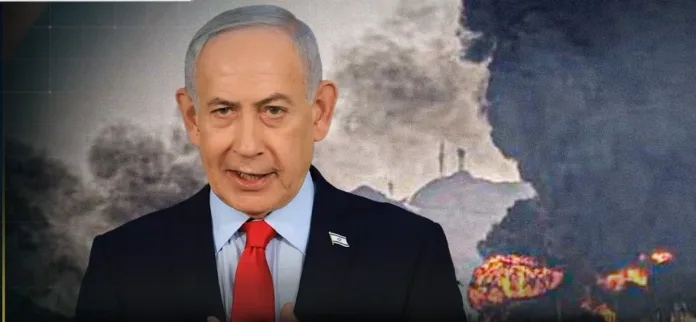

Israel pauses gas field attacks after Trump request amid escalating conflict
Israeli Prime Minister Benjamin Netanyahu has agreed to “hold off” on further attacks targeting Iranian gas fields following a request from US President Donald Trump, as tensions continue to escalate across the Middle East.
The decision comes after a week of strikes and counterstrikes that have affected energy infrastructure and raised fears of a broader regional conflict.
Netanyahu confirmed that Israel would pause further action against Iranian gas facilities, while also rejecting claims that he had drawn the United States into the ongoing war.
Despite the announcement, violence continued overnight.
Explosions were reported in both Jerusalem and the Iranian capital Tehran, with air strikes and missile interceptions taking place as both sides continued military operations.
Iran launched additional attacks across the Gulf region, with the United Arab Emirates, Kuwait, Saudi Arabia and Bahrain all reporting incoming missiles or drones.
Authorities in those countries activated air defence systems, warning residents of potential explosions caused by interceptions.
In Kuwait, a drone attack on an oil refinery caused a fire, according to state media reports.
In Bahrain, falling debris from intercepted missiles sparked a fire at a warehouse, while officials described the situation as a result of Iranian aggression.
The United Arab Emirates said it was actively responding to incoming threats, advising residents that they might hear loud sounds from defensive systems in operation.
Saudi Arabia also reported intercepting and destroying several drones over its eastern region.
The latest escalation follows an earlier Iranian attack on Qatar’s Ras Laffan energy facility, which resulted in significant damage but no reported injuries.
Qatar’s energy minister has since warned that the country’s liquefied natural gas export capacity could be reduced by 17 percent over the next five years as a result of the strike.
Qatar’s prime minister described the attack as a “very dangerous escalation”, highlighting concerns about the impact on global energy supply.
The conflict has already affected markets, with gas prices in the UK and Europe rising sharply following the attacks on key infrastructure.
Prices have begun to ease slightly after Israel signalled it would refrain from further strikes on Iranian gas facilities and as the United States indicated plans to increase oil output.
Iran has warned that any further attacks on its infrastructure would trigger an uncompromising response.
Earlier, the country’s foreign minister said Tehran would act with “zero restraint” if additional strikes were carried out.
The importance of energy infrastructure in the conflict has drawn international attention.
A joint statement issued by countries including the UK, France and Japan expressed readiness to support efforts to ensure the safe passage of ships through the Strait of Hormuz, a critical route for global oil shipments.
The situation remains volatile, with military activity continuing across multiple locations even as diplomatic signals suggest attempts to prevent further escalation.
For now, Israel’s decision to pause attacks on Iranian gas fields marks a temporary shift, but the broader conflict shows little sign of ending.