
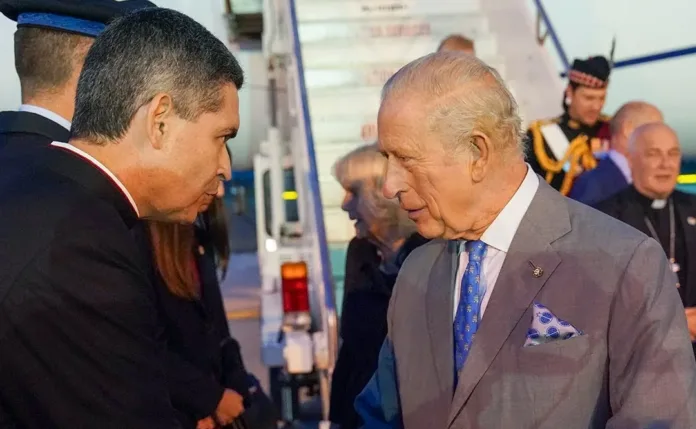

King Charles’s Vatican visit marks history as royal tensions and scandal cloud the moment
King Charles has arrived in Rome for a moment steeped in history and symbolism — but also shadowed by controversy. The monarch and Queen Camilla landed at Ciampino Airport on Wednesday evening ahead of an unprecedented state visit to the Vatican, where the King will meet and pray with Pope Leo. It marks the first time in more than 500 years that a British monarch has prayed alongside a pope, a gesture that aims to bridge centuries of division between the Church of England and the Catholic Church.
The Palace has called the meeting a “landmark in Christian unity,” and the King’s spokesman described it as a “bulwark against those promoting conflict, division and tyranny.” The statement framed the event as an act of faith and diplomacy, emphasising solidarity between two of the world’s most influential Christian communities during what it called “times of such global challenge.”
Yet even as the royal party touched down in Rome, the trip’s significance risked being overshadowed by the ongoing scandal involving Prince Andrew. The King’s younger brother, recently stripped of his titles and the right to be called the Duke of York, remains under intense scrutiny over his association with the late sex offender Jeffrey Epstein.
Pressure deepened this week following the publication of Virginia Giuffre’s posthumous memoir, which repeated allegations of sexual abuse involving Andrew — claims he has always denied. The Palace has refused to comment, hoping instead that the focus will turn to the King’s diplomatic mission.
Behind the scenes, aides are eager to draw attention away from Andrew’s controversies and towards what they see as a moment of profound religious and cultural importance. The Vatican visit has been carefully choreographed to highlight reconciliation, unity, and the King’s personal commitment to interfaith dialogue.
Cardinal Vincent Nichols, the Archbishop of Westminster, told the BBC that the two leaders share “different approaches” but will “find common ground.” He described Pope Leo as “very attentive” and direct in his speech, while King Charles, he said, was “a little more subtle.” Nichols added that both men would likely be mindful of their personal and familial challenges as they “place themselves before God and ask for grace and strength to live through all the difficulties that we all have in life.”
Thursday’s itinerary underscores the trip’s historic weight. The King and the Pope will meet at the Vatican before attending a joint service in the Sistine Chapel — a setting rich in symbolism. Under Michelangelo’s famous ceiling, choirs from both the Vatican and the royal household will perform as Anglican and Catholic clergy lead prayers of unity.
The event breaks a centuries-old convention: monarchs are rarely filmed in prayer, given the act’s private nature. But in this rare public expression of devotion, King Charles and Pope Leo will kneel side by side, a striking image of reconciliation after the Reformation split their churches in the 16th century.
Later, the King will visit St Paul’s Outside the Walls, a basilica long associated with England’s medieval rulers. The church houses the tomb of St Paul and bears the insignia of the Order of the Garter, a reminder of historic ties between Rome and the English crown. There, Charles will be inducted as a “royal confrater,” an honorary spiritual title within the abbey’s confraternity — another gesture symbolising restored fellowship.
It will also mark the King’s first meeting with Pope Leo, who succeeded Pope Francis, whom Charles and Camilla last met in 2023 shortly before the pontiff’s death. A Foreign Office spokesperson described the Vatican visit as “an opportunity to strengthen the UK’s relationship with the Catholic Church, the world’s largest Christian denomination.”
For King Charles, this journey blends faith, duty, and delicate diplomacy. It is both a deeply personal mission — reflecting his long-standing commitment to building bridges between religions — and a strategic bid to redirect attention from turmoil at home. In Rome’s timeless setting, the monarch hopes to project unity, even as his own family remains divided.