
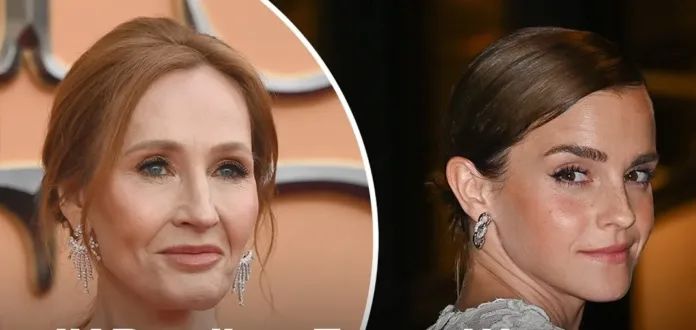

Rowling savages Watson’s remarks, reigniting bitter feud over transgender rights
JK Rowling has reignited her public feud with Emma Watson, dismissing the actor’s recent comments on their rift as misguided and declaring that Watson is “ignorant of how ignorant she is.”
The clash stems from longstanding disagreements between the Harry Potter author and her former cast members over transgender rights. Watson had sought to strike a conciliatory tone during a podcast interview, in which she reflected on her relationship with Rowling despite their differences. “I really don’t believe that … holding the love and support and views that I have, mean[s] that I can’t and don’t treasure Jo and the person that I had personal experiences with,” Watson said.
But Rowling’s response, published in a lengthy post on Monday, made clear that she was unmoved by Watson’s overture. The author wrote that Watson and her fellow Harry Potter star Daniel Radcliffe had gone beyond simply expressing their beliefs. According to Rowling, both had acted as though their past professional ties gave them a special right—or even an obligation—to publicly challenge her stance on gender identity.
“Emma Watson and her co-stars have every right to embrace gender identity ideology,” Rowling conceded. “Such beliefs are legally protected, and I wouldn’t want to see any of them threatened with loss of work, or violence, or death, because of them.”
Yet she went on to argue that Watson in particular had “enthusiastically participated” in what she described as the “trashing of women’s rights.” Her choice of words left little room for reconciliation and underscored the bitterness that has marked the dispute since it first erupted several years ago.
The author’s sharp rebuke is the latest chapter in an increasingly public war of words that has divided the Harry Potter fandom. For many, the franchise has become a cultural touchstone, with its stars and creator holding lasting influence. That legacy has now been clouded by deep ideological divides, amplified by social media and press coverage.
Rowling’s critics, including Watson and Radcliffe, have repeatedly said they support transgender rights and reject discrimination. Both actors have publicly distanced themselves from the views expressed by Rowling, who has positioned herself as a defender of women’s sex-based rights against what she regards as the encroachment of gender identity activism.
The latest exchange illustrates the starkly opposing ways in which Rowling and her former cast members view their responsibilities to fans and to the broader cultural debate. Watson has suggested it is possible to respect Rowling personally while rejecting her political positions. Rowling, however, views such statements as disingenuous, interpreting them as attempts to soften the damage of outspoken opposition while continuing to undermine her publicly.
The feud has become emblematic of wider societal tensions around transgender rights, freedom of expression, and the role of public figures in shaping debate. Rowling’s interventions have drawn both fierce condemnation and staunch support, turning her into one of the most polarising voices in contemporary culture.
For Watson, who has championed feminist causes and served as a UN Women goodwill ambassador, the row represents a difficult balancing act. She has sought to express solidarity with trans people while avoiding outright hostility towards Rowling. Yet the author’s latest broadside suggests that any hope of reconciliation may be further away than ever.
As the rift deepens, both women remain symbols in a culture war that shows no sign of abating. For Rowling, the defence of what she sees as women’s rights appears non-negotiable. For Watson, affirming trans inclusion remains equally essential. The former allies now stand on opposite sides of a fault line that continues to fracture one of the world’s most beloved literary legacies.