

Iranians fear a delayed US strike could still unleash widespread destruction
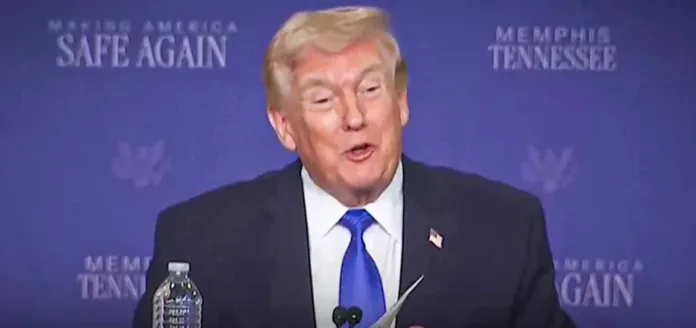
A wave of relief swept across Iran after US President Donald Trump announced he would postpone a threatened attack on the country’s energy infrastructure, but fears remain that the danger has only been delayed.
Many inside Iran reacted with cautious optimism to the announcement, even as officials in Tehran denied that any direct or indirect talks had taken place with Washington.
Despite the absence of confirmed negotiations, diplomatic efforts have continued behind the scenes. Turkey’s foreign minister, Hakan Fidan and Oman’s foreign minister, Badr Albusaidi, have reportedly been in contact with both Tehran and Washington in an attempt to ease tensions.
However, the uncertainty surrounding the situation has left many Iranians feeling on edge.
Some believe the postponement does not signal a de-escalation but instead delays a potentially devastating attack.
Concerns have been heightened by earlier threats targeting Iran’s power supply, which could have widespread consequences for millions of people.
The possibility of such an attack has triggered alarm over what could happen if electricity systems were disrupted across the country.
Iranian reformist writer Ahmad Zeidabadi described the potential consequences in stark terms, warning that widespread power outages could lead to shortages of water, fuel, food and essential services.
He said that such a scenario would plunge homes and streets into darkness and severely disrupt daily life for millions.
The threat has also drawn strong reactions from officials and analysts within Iran.
Yousef Pezeshkian, son of President Masoud Pezeshkian, suggested that any attack on infrastructure would inevitably lead to retaliation, arguing that actions taken by one side would eventually be mirrored by the other.
Legal experts have also raised concerns about the implications of a pre-announced strike.
Reza Nasri, an international lawyer with links to Iran’s foreign ministry, said such an attack would be premeditated rather than occurring in the chaos of conflict.
Meanwhile, energy experts have pointed out that Iran’s electricity network is widely distributed, making it difficult to disable entirely through limited strikes.
They noted that the country’s energy grid spans a broad range of facilities, reducing the likelihood of a single attack causing total collapse.
Even so, fears remain about the wider impact of escalating tensions.
More than three million people are estimated to have been internally displaced by the war, with many leaving major cities such as Tehran during the spring holiday period.
In addition to concerns about power infrastructure, some Iranian commentators have suggested that the threat of attacking energy facilities could be a diversion.
They argue that the United States may instead be focused on strategic locations such as islands in the Strait of Hormuz, a critical route for global oil exports.
Iranian officials have warned that any attack on their territory or infrastructure would be met with a strong response.
Statements from defence authorities indicated that retaliation could include targeting regional energy infrastructure or disrupting shipping routes in the Persian Gulf.
Despite the temporary pause in military action, the overall situation remains volatile.
Many Iranians continue to fear that the delay announced by Trump does not represent a lasting shift, but rather a pause before further escalation.