
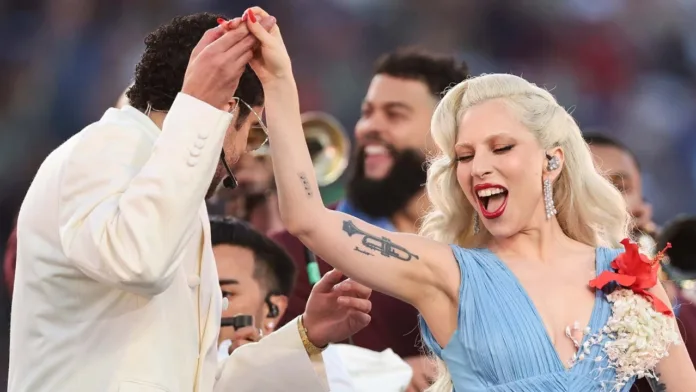

Bad Bunny dominates Super Bowl halftime with Spanish only set rooted in Puerto Rican identity
Bad Bunny transformed the Super Bowl halftime show into a sweeping tribute to Puerto Rico using the biggest stage in American sport to centre heritage unity, and memory rather than confrontation.
For fourteen tightly choreographed minutes, the global superstar delivered the first Super Bowl half time performance ever staged entirely in Spanish. It was a landmark moment that redefined what cultural power can look like inside one of the most-watched events in the world.
The set unfolded like a moving portrait of Puerto Rican life. Bad Bunny emerged from a sugarcane field before navigating a vivid Latin landscape filled with familiar scenes, including a nail salon and a neighbourhood bar. At the heart of the stage stood his casita a small house styled to resemble a traditional Puerto Rican home that has become a recurring symbol throughout his recent tours.
Celebrity guests appeared throughout the performance. Lady Gaga joined him for a Latin-inspired rendition of Die With A Smile while Ricky Martin added to the celebration of shared heritage. Pedro Pascal, Cardi B, Karol G, and Jessica Alba were also visible dancing on the porch of the casita as the performance moved fluidly between spectacle and intimacy.
Bad Bunny, whose real name is Benito Antonio Martinez Ocasio, delivered a medley of his biggest hits, including Tití Me Pregunt,ó MONACO and BAILE Inolvidable. The show leaned heavily into music from his Grammy award-winning album Debí Tirar Más Fotos, which he released last year and has since become a defining statement of his artistic direction.
Although many expected a direct political attack on the current US administration, the artist chose a different tone. Two English-language messages punctuated the show. One billboard read The only thing more powerful than hate is love. Later, the phrase Together We Are America appeared written across a football that he held aloft.
Puerto Rico remained the emotional core of the performance. Family and memory featured prominently, including a scene of a young couple marrying among a crowd of Latino dancers. In a symbolic moment, Bad Bunny handed a Grammy award to a small child as his 2026 acceptance speech played on a nearby television set.
A striking sequence saw him climb an electricity pylon while continuing to rap a visual reference to the widespread infrastructure collapse caused by Hurricane Maria in 2017. The moment appeared to honour those who died during the disaster, which devastated the island and left lasting scars.
His outfit also carried meaning. Bad Bunny wore a beige sweater marked with the number 64. The figure is widely understood to reference the official death toll initially reported after the hurricane, a number later criticized for vastly understating the true human cost. The Trump administration at the time faced intense criticism from Puerto Ricans who said the federal response fell far short of what mainland states received after similar disasters.
Unlike his recent Grammy speeches, where he openly criticized Immigration and Customs Enforcement, there were no direct attacks on President Trump during the Super Bowl. This restraint surprised some viewers,s especially given the recent protests across the US following fatal shootings by federal agents.
Trump, who did not attend the game, later condemned the performance on his Truth Social platform, calling it absolutely terrible and an affront to the greatness of America.
Despite early sound issues, Bad Bunny maintained control of the stadium, closing the set with tracks from his latest album that drew the loudest response. The performance marked his first live appearance in the United States since the album’s release and signalled a clear message.
On a night built to celebrate American spectacle, Bad Bunny chose to redefine what America looks like, placing Puerto Rico firmly at its centre.