
.png)

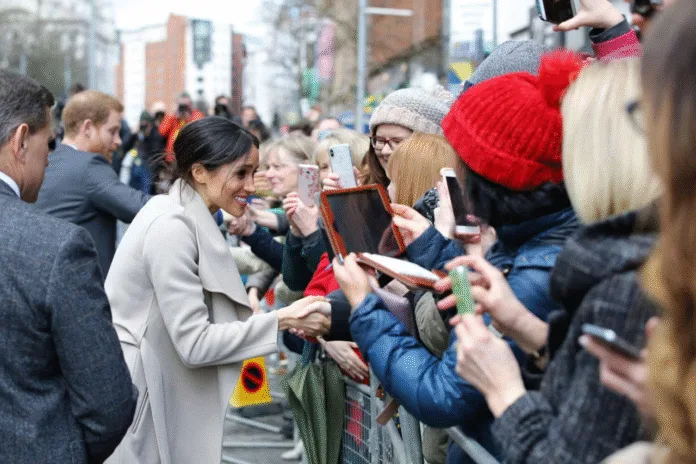
When a high-profile couple steps back from the British monarchy, the stated goal is often financial independence and, crucially, a retreat from the British press’s intrusive lens. The narrative is usually one of self-preservation. Yet, looking at the recent trajectory of Harry and Markle, a fascinating contradiction emerges. Since their highly publicised departure, their visibility has arguably increased, driven by lucrative streaming deals, record-breaking memoirs, and ongoing legal battles that keep them firmly in the headlines.
The numbers behind this visibility are staggering. In 2023, the duke’s memoir, Spare, sold 1.43 million copies globally on its first day, making it the fastest-selling non-fiction book of all time. Furthermore, their initial multi-year content partnership with Netflix was reportedly valued at around $100 million. Simultaneously, the Duke of Sussex has waged a relentless, high-profile legal war against UK publishers, securing a £140,600 damages payout from Mirror Group Newspapers in 2023 over historic phone hacking.
These facts present a compelling question: can an “ex-royal” truly survive without the very media machine they claim to despise? Or is the constant friction with the press an essential component of their independent brand value?
The economics of royal outrage
The traditional royal framework relies on a symbiotic, albeit fraught, relationship with the media known as the “Royal Rota.” When members of the monarchy step away from this established system, they lose access to state funding and the structured PR machinery of the institution. Consequently, they must monetise their most valuable asset: their story.
This introduces the primary paradox of their media strategy:
- The need for relevance: To secure multi-million-pound deals with entertainment giants, ex-royals must guarantee an audience.
- The currency of conflict: The most engaging content they can offer revolves around their conflict with the institution they left and the media that covered them.
- The media loop: To promote this content, they must engage with the broader media ecosystem, inevitably attracting the attention of the paparazzi they wish to avoid.
If we examine the search trends for Harry and Markle, the data reveals that public interest spikes most dramatically not during their philanthropic endeavours, but during moments of direct tension with the press or the Palace. The Harry & Meghan docuseries became Netflix’s most-watched documentary debut primarily because it promised an unfiltered look at their grievances with the media landscape.
Why ex-royals hate the paparazzi (but secretly rely on them)
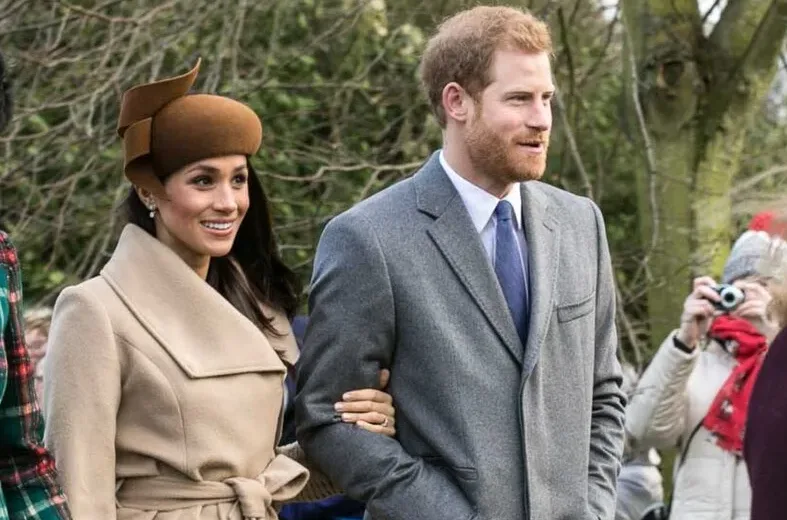
It is undeniable that figures who leave the monarchy have suffered genuine, well-documented intrusions into their private lives. The ongoing lawsuits spearheaded by the Duke of Sussex highlight a toxic history of unlawful information gathering by certain factions of the British tabloid press. However, in the modern digital age, the line between media intrusion and necessary brand promotion has become increasingly blurred.
When analysing the latest Meghan and Harry news, it becomes clear that their independent commercial viability is tethered to public fascination. If the paparazzi entirely ceased taking their photographs, and the tabloids stopped dissecting their movements, their marketability would inevitably decline.
- The streaming mandate: Entertainment platforms require constant cultural relevance from their partners. If the media stops talking about an ex-royal, their subscriber draw diminishes.
- The publishing pipeline: Tell-all memoirs rely on media anticipation and controversy to drive record-breaking sales.
- The advocacy platform: Even their philanthropic initiatives require media coverage to gain traction and secure funding.
The harsh reality is that the Duke and Duchess of Sussex exist in a complex ecosystem where the press is both the antagonist and the ultimate amplifier of their chosen narrative.
The legal strategy as a pr engine
Interestingly, the pursuit of privacy has itself become a highly publicised, content-generating endeavour. The legal battles against UK publishers serve a dual purpose. On one hand, they hold corporations accountable for historical wrongdoing. On the other hand, the high court showdowns keep the couple relevant, positioning them as crusaders against media corruption.
Every time Harry and Markle issue a statement regarding a privacy lawsuit or appear at the High Court, it generates global headlines. This continuous cycle of litigation ensures that Prince Harry and Meghan Markle’s media presence remains dominant, even without official royal duties to perform.
By categorising their ongoing media exposure as a fight for justice, they successfully maintain the spotlight while publicly condemning the mechanisms that provide it. This is a masterclass in modern PR, turning a defensive stance into an offensive brand strategy.
Are we redefining royal boundaries in the modern era?
The bigger issue isn’t just Harry and Markle; it’s how the very concept of royal duty and public privacy is changing before our eyes. In the past, stepping away from the monarchy meant a quiet life in the shadows. Today, that silent retreat no longer exists.
Instead, we are seeing entirely new emerging trends for independent royals:
- Audience loyalty over public consensus: They no longer need the approval of the broader British public; they just need a deeply committed global fanbase to fiercely consume their content.
- The “Attention Economy” metric: Media value is no longer driven by ribbon-cutting ceremonies, but by raw, measurable engagement, podcast downloads, and streaming hours.
- Controversy as a commercial strategy: Rather than viewing press tension as a fatal setback, modern ex-royals treat it as a deliberate tactic to dominate the news cycle and secure multi-million-pound contracts.
This paradigm shift raises a difficult question: Is absolute privacy actually the goal, or is managed controversy simply the most profitable narrative for those with enough digital influence?
Why some argue they shouldn’t be criticised
To balance the discussion, it’s vital to look at the opposing view. For a significant portion of their audience, the continued media presence of the Duke and Duchess of Sussex is not a failure of their privacy goals, but proof of necessary modernisation.
From a mental health and media reform perspective, advocates argue that:
- The press must be held accountable: High-profile lawsuits remain essential to expose unlawful tabloid practices, even if it brings temporary unwanted attention.
- The right to their own narrative: Stepping back from the institution shouldn’t mean they lose the right to correct false stories or profit from their own lived experiences.
- The modernisation of celebrity: Ultimately, they are paving a new path for public figures who want to detach from toxic institutional frameworks without surrendering their voice.
From this perspective, the inability to truly step away from the paparazzi is a reflection of a broken media system, rather than personal hypocrisy.
It’s not just about one couple
Ultimately, the ongoing drama surrounding ex-royals is a textbook case study in modern media culture. It goes far beyond the couple themselves and the specific lawsuits they file.
Their enduring presence reveals profound truths about our society:
- The intersection of royalty and reality: It highlights exactly how traditional institutions, aggressive tabloids, and streaming platforms now feed off one another to generate constant noise.
- The weaponisation of grievance: It proves that personal conflict has been completely commodified, serving as the primary fuel for the modern 24/7 content cycle.
- The new blueprint for survival: It demonstrates exactly how former working royals can construct an “independent” brand that actually thrives the more the traditional establishment attacks it.
More importantly, it completely shatters the widely held assumption that stepping down automatically leads to stepping away.
So why not fade away?
As the debates around their status continue to resurface, as predictable as the tide, one fundamental truth becomes impossible to ignore.
The old rules of public life have been rewritten.
- Stepping back is no longer an exit.
- Public outrage is no longer a career-ender.
- Raw media influence heavily outweighs traditional duty.
If this were a standard aristocratic family, they might have disappeared from our screens years ago. They would have quietly settled into a countryside estate and faded from public memory.
But in today’s hyper-polarised media landscape, controversy doesn’t end a royal brand. It actively sustains it.
And that is the real story.