

Reliability woes and engine doubts leave Aston Martin trailing rivals
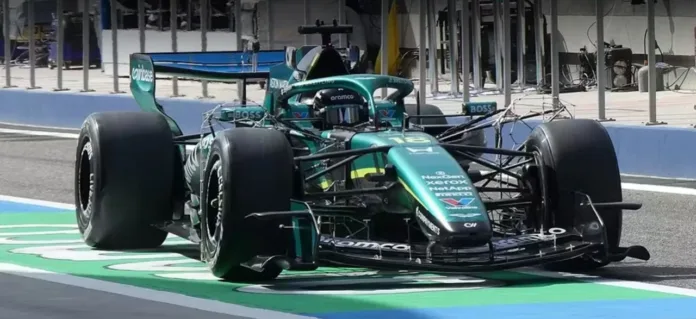
When Aston Martin’s 2026 Formula 1 car first rolled out in testing at the end of January, it turned heads throughout the pit lane. In its all-black temporary livery, the machine looked aggressive and different, shaped by the influence of Adrian Newey, who joined as managing technical partner last year and has also taken on the role of team principal in 2026.
But admiration quickly gave way to concern.
The car managed just four laps on its opening day in Barcelona before breaking down at the pit-lane entrance. By the end of pre-season testing in Bahrain, Aston Martin had completed the fewest miles of any team and set the slowest times.
Lawrence Stroll, the team’s owner, cut a frustrated figure in the paddock. On the rare occasions the car ran without issue, it appeared unpredictable and difficult to handle.
Privately, few within the team are disguising the scale of the challenge. The problems are extensive and will take time to resolve.
The situation feels jarring given the expectation that surrounded the project. On paper, Aston Martin had assembled a formidable line-up. Stroll secured Honda as a factory engine partner and recruited Newey, widely regarded as one of the greatest designers in the sport’s history. The team also invested in a state-of-the-art factory, wind tunnel and simulator, backed by substantial sponsorship resources.
Fernando Alonso, still highly respected across the grid, remains a central figure in the cockpit despite being in his mid-40s.
Yet recent seasons have been marked by inconsistency. A strong start to 2023 brought six podiums in eight races, but development stalled in the second half of the year. The pattern repeated in 2024, and by 2025, Aston Martin had slipped to seventh in the championship.
Newey’s arrival was meant to spark a turnaround, especially with the sweeping 2026 regulation changes offering a fresh start. Historically, he has thrived in such moments.
However, the car now on track appears underdeveloped. Teams had long been working on their 2026 designs before the regulations were formally published in January 2025. Newey began in March that year and reportedly ordered a redesign, leaving Aston Martin months behind its rivals.
The car has been described as one of the more extreme interpretations of the new rules. At present, it is both slow and unpredictable. Whether it can be refined into a competitive package remains uncertain.
Compounding matters is Honda’s engine performance. The manufacturer previously endured a difficult return to Formula 1 in 2015. Although it announced its renewed partnership with Aston Martin in 2023, it had scaled back its dedicated F1 engine operations during its earlier withdrawal.
Rebuilding that programme appears to have left Honda behind schedule. While other teams have progressed, questions linger over why Honda has struggled to match expectations.
For Alonso, the scenario feels uncomfortably familiar. A decade ago, he joined McLaren during Honda’s troubled comeback. Success eventually came for Honda with Red Bull, but not in time to benefit Alonso.
Now 44, he faces another uncertain campaign. Publicly, he remains optimistic, insisting that “everything can be fixed” and that solutions are in place. Privately, the path forward is less clear.
The combination of Newey, Honda and Aston Martin once promised a final flourish to Alonso’s storied career. Instead, early signs suggest another uphill battle.