
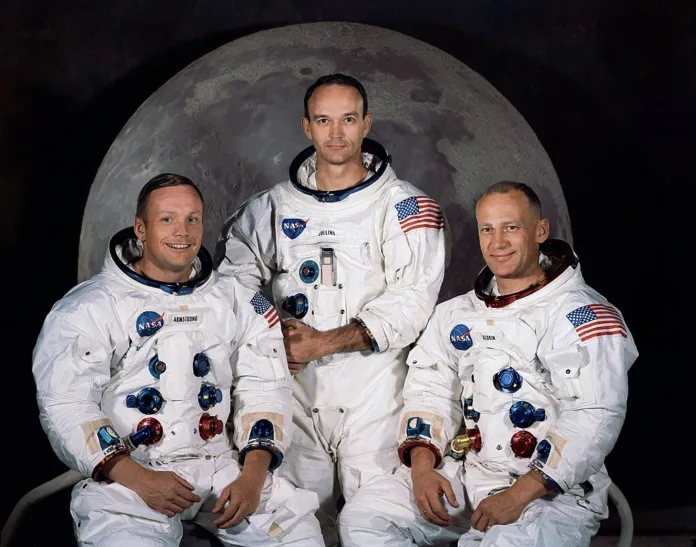


Towards the moon. In July 1969, that phrase captured the attention of an estimated 650 million viewers worldwide, who watched as Apollo 11 astronauts stepped onto the lunar surface. It remains one of the most documented events in modern history, and one of the most questioned.
More than five decades later, surveys in various countries still show that a minority of people doubt that the landing happened exactly as presented. The persistence of scepticism says less about the event itself and more about modern trust in institutions, including the US government.
This article takes a clear, evidence-led look at the journey towards the moon, what is proven, what is misunderstood, and why the debate refuses to disappear.
The historical context: Why the mission mattered
To understand the controversy, you first need to understand the stakes.
Apollo 11 was not just a scientific mission. It was the peak of the Cold War space race between the United States and the Soviet Union. After the USSR’s early wins, including the first satellite and first human in space, the US needed a decisive technological victory.
By 1969:
- The US had invested roughly $25 billion (over $175 billion today) in the Apollo programme
- NASA employed around 400,000 people across contractors and agencies
- The Saturn V rocket remained the most powerful launch vehicle ever successfully flown
In that environment, the push towards the moon carried enormous political weight.
What evidence confirms that the moon landing happened?
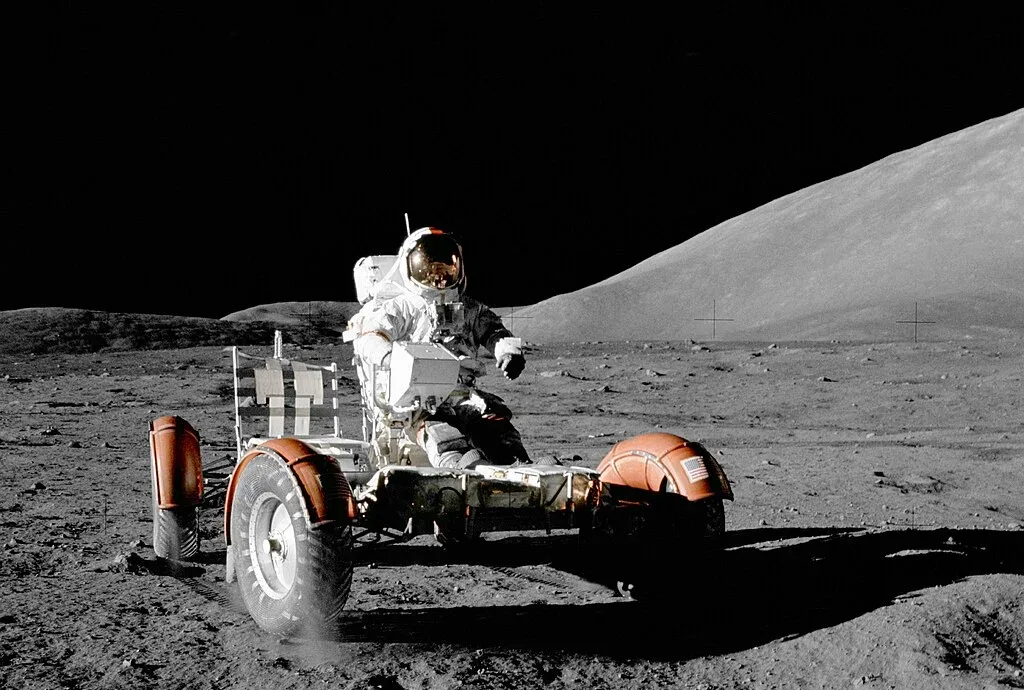
Despite persistent online debate, the physical and technical evidence supporting the Apollo 11 landing is extensive and Despite persistent online debate, the physical and technical evidence supporting the Apollo 11 landing is extensive and independently verified.
1. Lunar surface samples
Apollo astronauts returned with 382 kilograms of lunar rock and soil across multiple missions. These samples have been studied by scientists worldwide, including in the UK, and show clear differences from Earth’s geology.
Key findings include:
- Unique isotopic compositions
- Evidence of long-term solar wind exposure
- Micrometeorite impact patterns are impossible to replicate on Earth
No credible geological body has disputed their lunar origin.
2. Independent tracking by multiple countries
During the journey towards the moon, the spacecraft was tracked not only by NASA but also by:
- The Soviet Union
- The UK’s Jodrell Bank Observatory
- Independent radio operators
If the mission had been staged entirely on Earth, it would have required coordinated deception across geopolitical rivals at the height of the Cold War, a scenario most historians consider highly improbable.
3. Laser reflectors are still working today
Apollo missions placed retroreflectors on the lunar surface. These devices still allow scientists to measure the Earth–Moon distance using laser ranging experiments.
To this day:
- Observatories worldwide bounce lasers off these reflectors
- The timing of the return signal confirms their presence on the Moon
- Measurements have refined our understanding of lunar drift
This remains one of the strongest pieces of ongoing physical evidence.
Why does suspicion around the US government persist?
Even with strong technical evidence, public scepticism has never fully disappeared. The reasons are more psychological and pEven with strong technical evidence, public scepticism has never fully disappeared. The reasons are more psychological and political than scientific.
Several factors fuel ongoing doubt:
- Historical distrust following events like the Vietnam War and Watergate
- The sheer ambition of the mission in the 1960s
- Grainy original footage that looks dated by modern standards
- The rise of internet-era conspiracy culture
Importantly, questioning government narratives is not inherently irrational. Healthy scepticism is part of democratic societies. The key question is whether the evidence supports the suspicion.
The most common claims examined
As the discussion about the journey towards the moon continues online, certain claims repeatedly surface. Most have been analysed in detail by engineers and physicists.
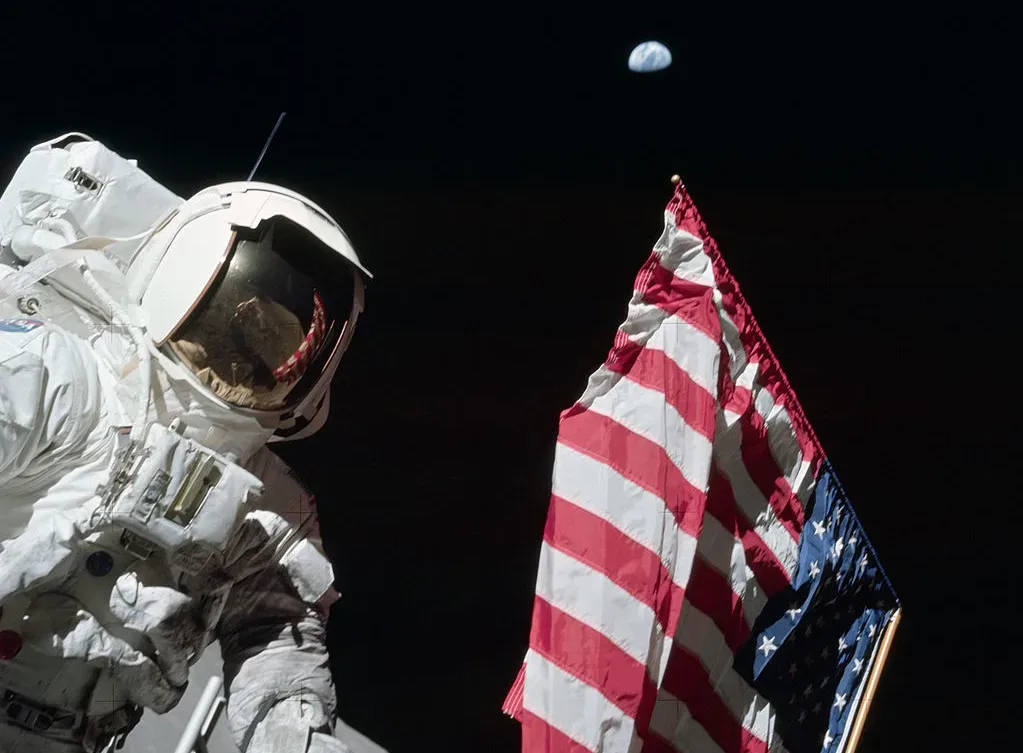
Claim 1: The flag appears to wave
Critics often point to footage in which the US flag appears to ripple, suggesting wind.
What the data shows:
- The Moon has no atmosphere capable of creating wind
- The flag used a horizontal support rod
- Movement occurred when astronauts twisted the pole into the soil
- With no air resistance, the fabric continued oscillating longer than it would on Earth
This behaviour is consistent with physics in a vacuum.
Claim 2: No stars are visible in photos
Some argue the absence of stars proves studio lighting.
Technical explanation:
- The lunar surface is brightly sunlit
- Camera exposure was set for foreground objects
- Stars are too faint to register at those exposure levels
The same effect occurs in daylight photography on Earth.
Claim 3: Shadows look “wrong”
Shadow angles in Apollo images are often cited as evidence of multiple light sources.
In reality:
- Uneven lunar terrain distorts shadow appearance
- Wide-angle lenses exaggerate perspective
- A single light source, the Sun, can produce varying shadow angles on irregular ground
Photographic analysis consistently supports this explanation.
The role of media amplification
Part of the modern confusion around the moon landing stems from how information spreads.
In the decades since Apollo 11:
- Documentaries have dramatised the event
- Online forums have recycled debunked claims
- Algorithms often promote controversial content over verified information
This creates what media analysts call “false balance”, where fringe doubts appear as credible as well-established evidence.
For readers following the story towards the moon today, distinguishing signal from noise has become harder than in 1969.
What serious analysts actually debate
Among credible historians and space analysts, the debate is rarely about whether the landing happened. Instead, discussion tends to focus on more grounded questions.
These include:
- Whether Apollo-scale missions could be repeated today at a similar cost
- The geopolitical motivations behind the programme
- The long-term value of crewed lunar exploration
- The reliability of Cold War-era public communications
These are legitimate areas of inquiry that do not require dismissing the landing itself.
Why the moon landing still matters today
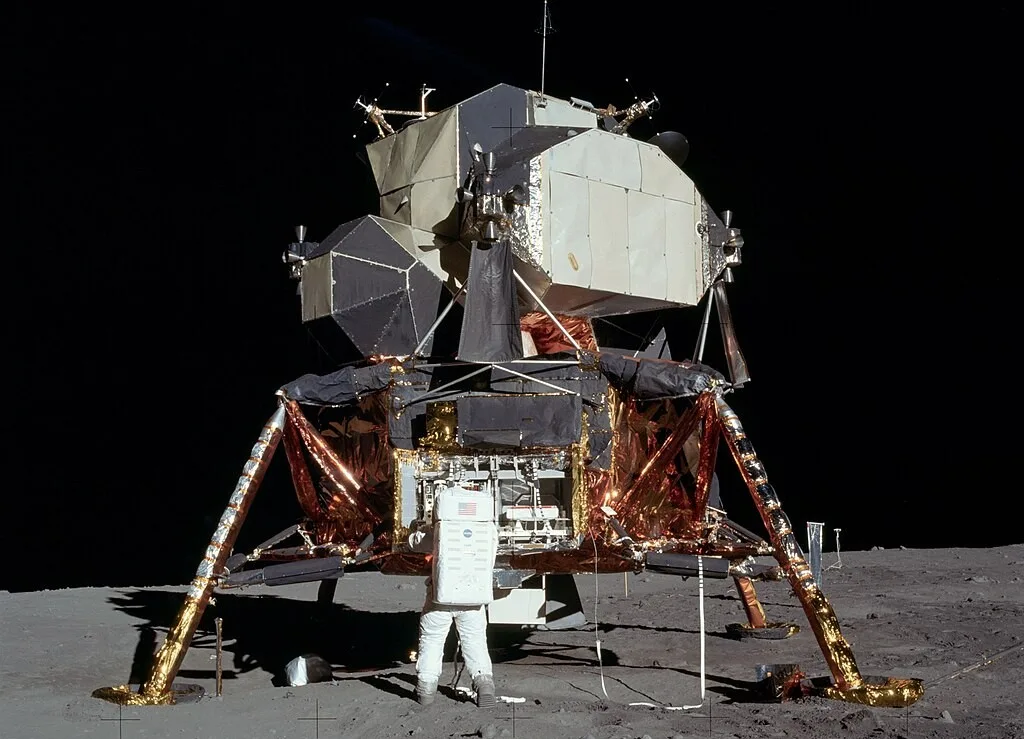
The continued interest in Apollo is not just historical curiosity. It reflects broader public questions about institutional trust, The continued interest in Apollo is not just historical curiosity. It reflects broader public questions about institutional trust, technological ambition, and government transparency.
For UK audiences in particular, the mission remains relevant because:
- British observatories independently tracked Apollo
- UK scientists continue to study lunar samples
- Future lunar missions involve international cooperation
The story of humanity’s journey towards the moon is still unfolding.
Fact vs fiction
To separate evidence from speculation, keep these grounded points in mind:
What is strongly supported by evidence
- Physical lunar samples analysed worldwide
- Independent Cold War tracking data
- Working lunar laser reflectors
- Consistent photographic physics
What remains largely driven by perception
- Visual oddities in low-resolution footage
- Distrust of US government narratives
- Internet-era amplification of fringe claims
Understanding this distinction is essential for any serious review of the mission.
Evidence over suspicion
The phrase towards the moon still carries emotional weight because it sits at the intersection of science, politics, and public trust.
Based on the totality of verifiable evidence, the Apollo Moon landings remain one of the most thoroughly documented achievements of the 20th century. At the same time, the persistence of doubt reflects a modern environment where institutional credibility is frequently questioned.
For readers at DAILY TUESDAY, the most rational position is neither blind acceptance nor reflexive distrust. It is careful, evidence-led scrutiny.
Because when history is this significant, the facts, not the noise, deserve the final word.