
_(14643153342).jpg)

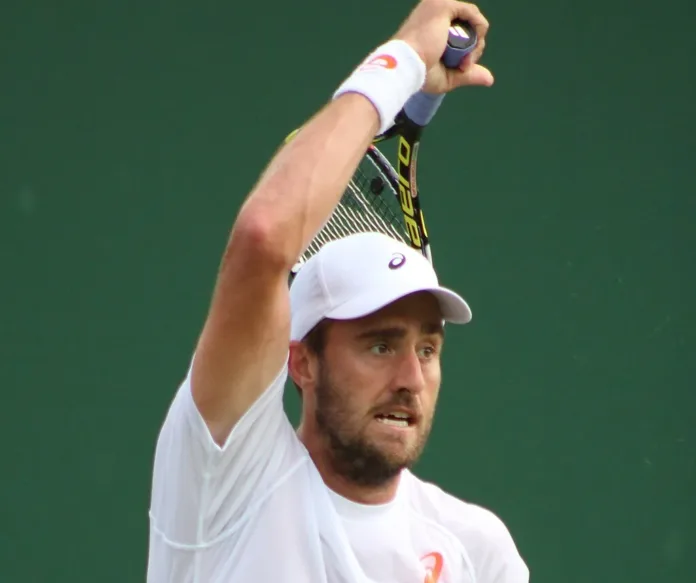
Steve Johnson challenges player complaints, saying tennis offers rare freedom despite no true offseason
The debate over tennis’s relentless calendar has resurfaced, and this time former ATP player Steve Johnson has delivered a blunt reality check to those voicing frustration about the lack of an offseason.
Speaking on The Nothing Major Show, Johnson acknowledged what many players have long argued: modern tennis no longer has a true offseason. Seasons stretch deep into November, December is crowded with exhibition events, and preparation for the new year begins almost immediately. But while he accepts the grind is real, Johnson believes players often overlook a major privilege that sets tennis apart from most professional sports.
Embed from Getty Images
“There’s not really an offseason,” Johnson said. “There’s a winter break.” For players based in the United States, that break may last only a few weeks before training resumes. In his view, however, focusing solely on that narrow window misses the bigger picture.
Johnson, who spent 12 years competing on the ATP Tour and reached a career-high singles ranking of world No. 21, argued that tennis players possess a level of control over their schedules that athletes in many other sports simply do not. While footballers, basketball players and baseball stars are locked into rigid league calendars, tennis players can step away on their own terms.
“You can take mini breaks throughout the year,” Johnson explained. “You can take three, four weeks off at a time. It just depends on how you do your schedules.”
That flexibility, he believes, is often ignored when complaints about burnout dominate conversations. Johnson stressed that every player manages their calendar differently, choosing how much time to rest, when to train and which tournaments to skip. For him, that freedom offsets the absence of a traditional offseason.
The comments came after fellow former professional Sam Querrey suggested he was “convinced” tennis no longer has an offseason at all. Querrey pointed to December’s growing list of exhibition tournaments as evidence that players are expected to remain active year-round. Johnson agreed with the assessment but added critical context.
In recent weeks alone, exhibition events have taken place across multiple continents. A tournament in Russia featured several high-profile ATP and WTA players in late November. Early December saw a UTS event staged in London, while additional exhibitions have been held in the United States. Next week, the World Tennis League is set to begin in India, further blurring the line between rest and competition.
For many fans, these events suggest players never truly step away. Johnson does not dispute that perception. Yet he insists participation remains a choice, not an obligation.
“Everybody has their own method,” he said, referring to how players balance rest, recovery and improvement during the brief winter pause. Some use the time to heal injuries. Others focus on fitness or technical changes. And some opt into exhibitions for financial or competitive reasons.
The new season officially begins on January 2 with the United Cup, leaving little margin between one year’s end and the next’s start. That rapid turnaround has fuelled growing concern about player welfare, particularly as tennis continues to expand its global footprint.
Still, Johnson’s message was clear: the sport’s structure offers a form of freedom that should not be underestimated. While the calendar is demanding, players are not trapped in an unbroken cycle of competition. Strategic breaks remain possible, and careers can be extended by careful scheduling.
His remarks have struck a nerve in a sport increasingly wrestling with how to balance commercial growth and athlete wellbeing. As complaints about exhaustion grow louder, Johnson’s perspective serves as a reminder that tennis, for all its pressures, also grants autonomy few other sports can match.
In an era where the grind feels endless, Johnson’s words challenge players to see not just what tennis takes from them, but what it gives back.