
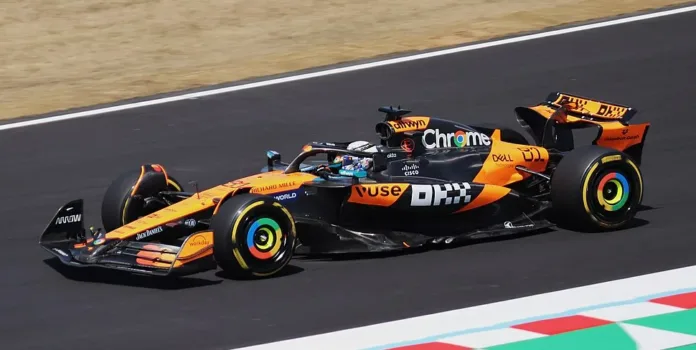


Mclaren’s strategy error turns Qatar into a title turning point as Verstappen closes the gap
Formula One heads to Abu Dhabi with three drivers still in contention for the world championship after a dramatic Qatar Grand Prix in which Max Verstappen claimed victory following a major McLaren strategy blunder. The mistake transformed the title picture and ignited the most open final race showdown since 2010. Lando Norris retains the points lead, but his advantage is now down to twelve over Verstappen, with Oscar Piastri four further points behind.
McLaren arrived in Qatar hoping to steady themselves after the disappointment of being disqualified from second and fourth in Las Vegas. Instead, they endured an even more painful afternoon. The race hinged on a safety car deployed on lap seven after Nico Hulkenberg and Pierre Gasly collided. Every team on the grid except McLaren chose to pit at that moment. With Pirelli enforcing a strict twenty five lap maximum per tyre set because of concerns over the circuit’s kerbs and cornering loads, the stop was an obvious decision for strategy. McLaren’s refusal became a pivotal error.
Embed from Getty Images
Verstappen immediately sensed the opportunity. When he emerged from his stop and saw McLaren had stayed out, he realised the race had tilted in his favour. Ahead lay a straightforward path to victory, and he executed it with trademark precision. The result leaves the title fight on a knife edge and shifts the momentum toward Red Bull heading into the final weekend.
For McLaren, the shock and frustration were clear. Piastri, who had been cruising towards what should have been a comfortable win, crossed the line in second and momentarily struggled to process the scale of the missed opportunity. His demotion from second to third in the championship added further pain. Norris was equally unsettled and questioned over the radio why the team had not pitted when the rest of the field had done so.
McLaren team principal Andrea Stella later explained that the team had feared losing track position if others had chosen to stay out. However, since anyone who stayed out was certain to lose position to those who pitted, the logic proved deeply flawed. A second factor was considered privately by rivals. Had both McLaren cars stopped, Piastri’s priority as the lead car meant Norris would have had to endure a double stacked stop, costing him around five extra seconds and potentially dropping him behind Kimi Antonelli and Carlos Sainz. Although Stella described this as an extra consideration rather than the main reason, it did little to silence whispers in the paddock that the team may have leaned unconsciously toward protecting Norris.
Stella has consistently rejected suggestions of favouritism and previously emphasised fairness when questioned about earlier strategic decisions in Hungary and Italy. After the race, he insisted the review would be thorough and analytical, focused on improvement rather than blame.
For neutrals, the Qatar result creates a thrilling final act. The last time more than two drivers entered the final race with a chance at the title was in 2010, when Fernando Alonso arrived in Abu Dhabi with an eight point lead over Mark Webber and a fifteen point cushion on Sebastian Vettel. Ferrari made a strategic error that day, and Vettel seized the championship. The echoes of that year add intrigue to the 2025 finale.
Norris attempted to remain calm about the situation, insisting that the pressure was no different than any other weekend. Piastri said that while the mistake hurt, it was not a catastrophe and that tough moments often make a team stronger. Verstappen, chasing a fifth consecutive crown, said he felt no pressure and intended simply to enjoy the fight after spending much of the year believing the title was out of reach.
The intensity now shifts to McLaren, who must regroup before Abu Dhabi. Stella has been part of similar drama before, having engineered Kimi Raikkonen’s comeback in 2007 and experienced heartbreak with Alonso in 2010. Drawing from that history, he said the team would use the lessons from Qatar to face the final challenge with renewed determination.